These days, Jeanelle Austin prefers to visit George Floyd Square in the quiet of the night, when the usual crowds have thinned and the South Minneapolis site has stilled long enough for her to listen.
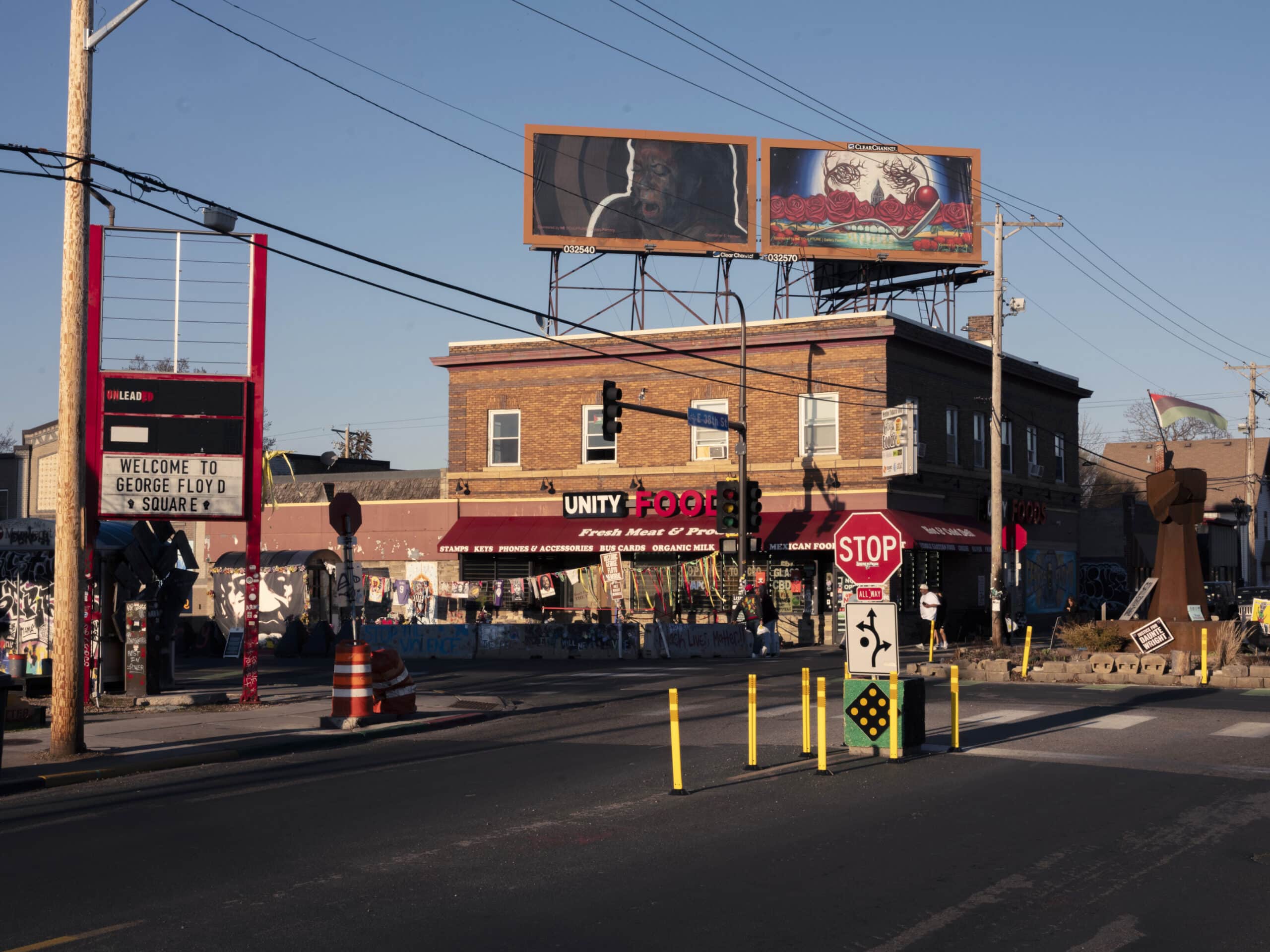
Photo: Joshua Rashaad McFadden/The New York Times/Redux
George Floyd Square—as the memorial and protest site is more commonly known—is at 38th Street and Chicago Avenue, in the diverse Powderhorn community. The Floyd memorial is just two blocks from Austin’s home, and although the square is, in practical terms, a traffic intersection, she never drives through it, saying that would feel disrespectful. Instead, Austin strides the square thoughtfully, along the way righting a piece of memorial art set askew by the wind, wiping a day’s grime off a laminated sign, and pausing to visually gauge the wellbeing of locals warming themselves at a barrel fire in front of Peoples’ Way, a defunct gas station overpainted with the call to action, “WHERE THERE’S PEOPLE THERE’S POWER” (recently purchased by the city, the former pit stop is awaiting development as a community hub).
Still, any traversing this square is eventful. A hulking, twelve-foot-tall sculpture (by artist-activist Jordan Powell-Karis) of an upraised fist plunges its steel into the night sky from the center of the intersection, summoning all passersby to rapt, if momentary attention. At Austin’s feet, the 1960s counterculture mantra, “POWER TO THE PEOPLE,” in black spray paint, leaps from the pavement. As Austin raises her head—all protest art and billboards.
In every direction civic protest at longstanding injustices suffered by communities of color has been lent voice through art-as-activism. Any reflective visitor might wonder: Shouldn’t this historic site of protest be preserved for eternity?
That question would turn out to be a clarion call that Austin and founding partners of the community nonprofit Rise & Remember (est. 2020) would come to answer. The recent recipient of a grant by Henry Luce Foundation’s Religion & Theology Program, which advances public knowledge on race, justice, and religion, Rise & Remember—Austin is a cofounder and currently its executive director—originally sprung from a local caretaker’s effort to preserve the offerings left by visitors at the square where George Perry Floyd Jr. (1973–2020) was killed six years ago (May 25, 2020). As she explains,
“When people lay offerings at the site, it is an extension of their pain and a recognition of what someone else has gone through. I have seen photographs of service men and women, baby blankets, bicycle helmets, bassinets—each marking a life lost.”
As Austin aptly suggests, every offering is a form of protest activated by a person raising their voice against racial injustice.
Today a preservation team from Rise & Remember strives to archive every sign, photo, teddy bear, healing crystal, crucifix, or other offering left at the square (they work daily from a classroom at the nearby non-profit Pillsbury House + Theatre). Whether it be an oversized mural, a hand-scripted placard, a photograph, or any other personal effect—each item is treated as sacred material. The team’s work is meticulous: After photographing the item, recording its date of arrival, and registering its original position at the site, archival conservation techniques—gentle cleaning, specialized treatments, and proper housing—are applied to the object to ensure that these expressions of grief, hope, and resistance survive for future generations to learn from.
Meanwhile, volunteer caretakers maintain the memorial itself. They arrive in shifts each day to clear away accumulated leaves and trash, to refresh flower arrangements, to mend weathered signage, and to keep a nearby Greenhouse dignified and welcoming. “This structure serves as the heart of the memorial,” Austin explains of the modest roofed space standing off from the rest of the street. A community center for educating the public in food justice and health, the Greenhouse also serves as a home to memorials to additional people of color who have been murdered by law enforcement. Potted plants and similar offerings are closely tended by community members during the city’s frigid winters. While these memorials may remind visitors of loss, they ultimately signal hope and the possibility of long-term healing.
In caring for the Floyd memorial and its many offerings, Rise & Remember moreover intends to demonstrate how all memorials can hold societies accountable. These memorials, says Austin, “tell that story so it does not happen again.” Jonathan VanAntwerpen, who directs the Foundation’s Religion & Theology Program, heartily concurs, citing how the work of Rise & Remember points to a larger movement across the country toward civic repair:
“Sacred work happens not just in sanctuaries, but in the streets where communities gather to remember, grieve, and build toward a more just future. This is faith-rooted work committed to mending the civic fabric. Grounded in a sense of place, such work insists that memory itself is a form of resistance and a necessary step toward collective healing.”
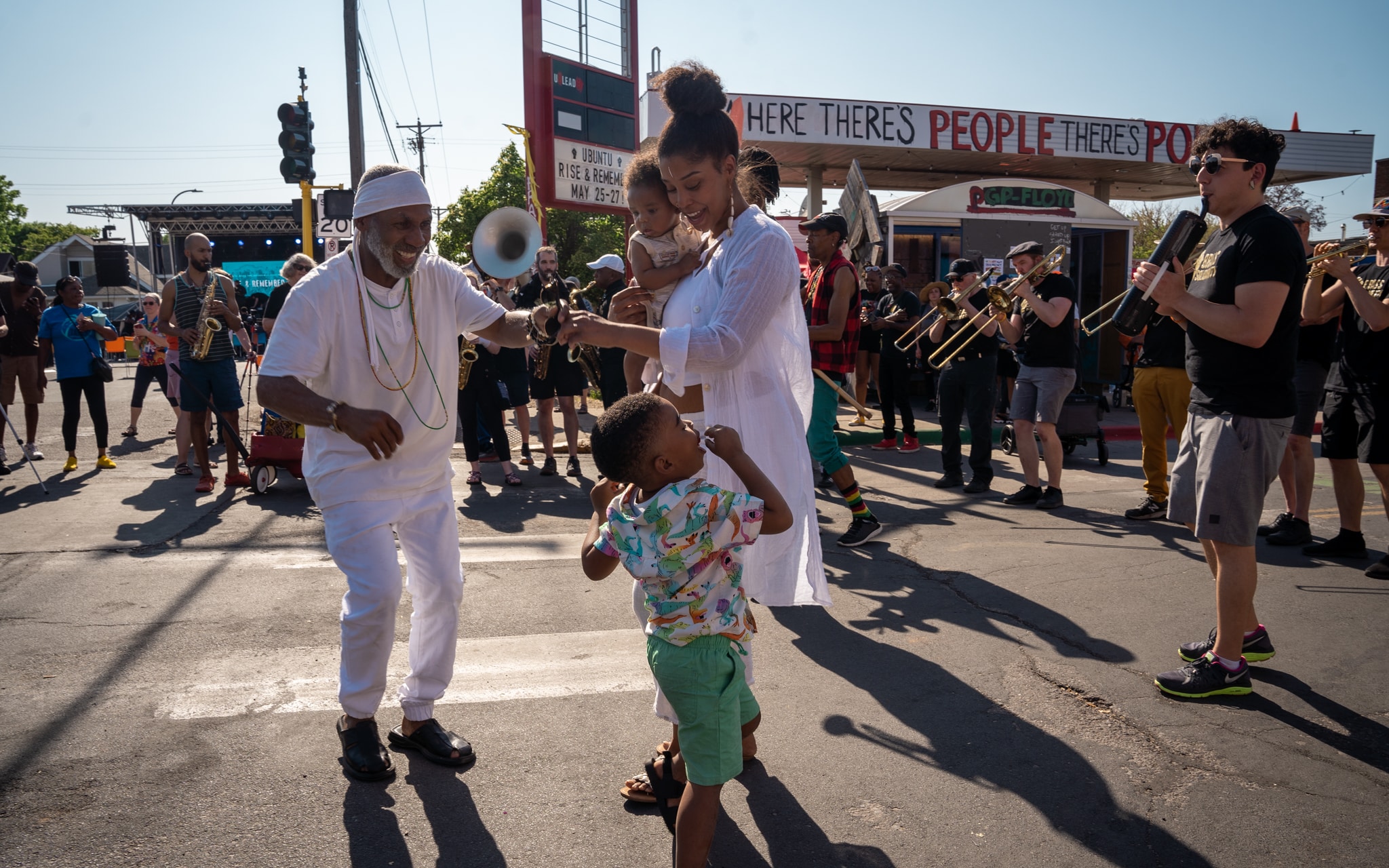
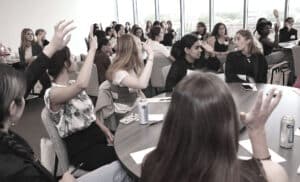
Rise & Remember Festival. Photo courtesy of Rise & Remember
With Austin as lead, caretakers also organize numerous gatherings and special events throughout the year, among them musical performances, an annual festival, storytelling and prayer sessions, birthday celebrations, and community symposia—all taking place in this bustling municipal commons while volunteers provide food and drink to visitors. Caretaking work ensures that not only locals but the thousands of people visiting from across the globe find a space that honors and dignifies their grief. This is the daily work of memorial tending: It is as an act of love and protest combined. As community gardener Jay Webb shared in a 2025 interview,
“This is our response [to such tragedy]: beauty for ashes … This is for everyone who has ever fallen to injustice.”
As Webb reminds us, it’s neighbors returning day after day who will ultimately ensure that this place and the memories it safeguards stay alive and meaningful.
While over the past several years Austin has increasingly taken on leadership responsibilities at Rise & Remember; nevertheless, she still tends the memorial personally when she can. It’s a growing task. Indeed, hundreds of names have been added by visitors to the site alongside Floyd’s own in recent years, where each one attests that they, too, were somebody’s loved one who continues to be cherished, missed, and valued more than any hashtag.
When we spoke with Austin in January 2026, her neighborhood was disrupted by a dramatic influx of Immigration and Customs Enforcement (ICE) agents. As tensions grew, she was reminded how police were militarized after Floyd’s killing in 2020, and she recalled how “the body remembers the trauma.” Austin shares that her favorite donation to the site is a handwritten sign with the inscription, “This is our collective PTSD,” commenting
“We recognize that we carry Post Traumatic Stress Disorder collectively—that is why we care for each other … Every time a person is killed, we feel that in our bodies.”
While the Floyd memorial summons visitors to work to healing society’s deepest divides, just months ago, 37-year-old Renée Good, a white US citizen, was shot dead by an ICE agent only four blocks from where Floyd had collapsed. Subsequently, Alex Pretti, also a 37-year old white citizen, was fatally shot by federal agents in the same general vicinity during neighborhood monitoring of ICE’s “Operation Metro Surge.” For their shocking violence, both events reignited longstanding tensions in a city already grappling with racial injustice.
Austin unapologetically points out how such incidents highlight the selective focus of the nation’s media and public, namely in that it took the death of Good for white citizens to pay attention to a problem that African Americans “have been telling folks [about] for a long time.” Just as important, Austin cites how the presence of ICE officers in the city’s neighborhoods has led to economic devastation. Family breadwinners have been detained, and children of color are now afraid to go to school. “As a community, we rally together, pull funds, and figure out how to help.”
Such events underscore what Austin has known since 2020: Communities impacted by state violence need spaces where residents may come together to grieve, remember, and care for one another. That spirit of kinship persists across George Floyd Square, a space enlivened by constant, caring activity—all exemplifying how a memorial can become a dynamic civic commons where tending to collective memory translates into tending to today’s—and the future’s—urban community.
When asked what others across the country might learn from the example of George Floyd Square and the singular Minneapolis community that is rising from the ashes of police brutality, Austin sums it up perfectly:
“It’s neighbors caring for neighbors.”