At the core of every community is its story: a lifeline of personal and collective heritage that connects family, friends, and neighbors across generations and geographies.
For Samip Mallick, a child of South Asian immigrants, understanding who he is today began by reclaiming where he came from. Mallick grew up immersed in shared family memories and cultural traditions, yet he found himself still wondering how his parents’ life journey connected to his own. As he recently recalled, “I wanted to understand myself and my community’s story.” Lingering mysteries eventually led Mallick to recognize something powerful: South Asian Americans have been shaping US history for well over two centuries, yet their voices were often missing from the public record.
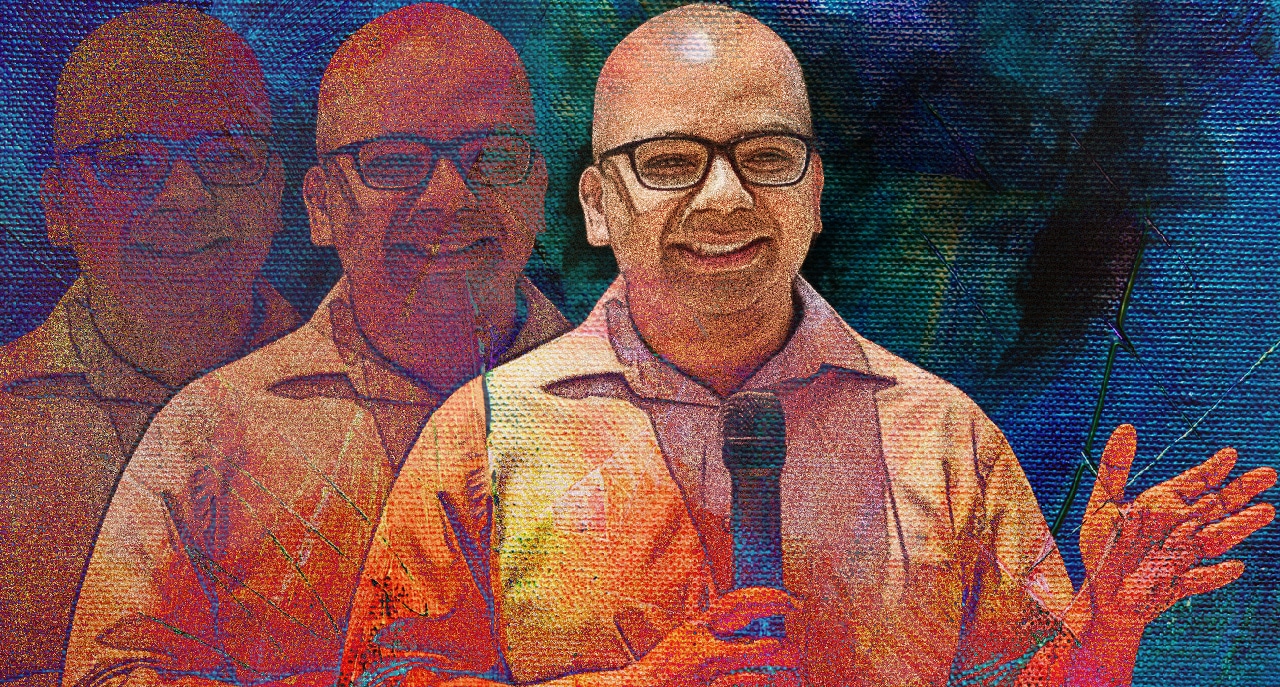
Samip Mallick. Art by Adonis Durado.
Rather than simply accept that absence, Mallick set out to address it. But what began as a personal inquiry quickly evolved into something much bigger than himself: a “long arc” effort to build the South Asian American Digital Archive (SAADA). Mallick was determined that SAADA would be a space to preserve and share the diverse experiences of the South Asian diaspora in their adopted country. The archives would also attest to the ways that diaspora has contributed to the nation’s rich and diverse traditions.
Today, some two decades along and thriving, SAADA reflects a community reclaiming its narrative and insisting that its histories and memories belong squarely within the American story.
Community-Driven History: Reclaiming and Amplifying Narratives
SAADA is community driven, operating always “by, for, and with our community in mind.” Its archive of more than 6,000 unique items—from oral histories and photographs to letters and community publications—is built mainly from private collections. Moreover, SAADA serves as a space for storytellers bringing hidden materials out of basements and attics and making them publicly accessible. Complementing the Henry Luce Foundation’ mission to strengthen community-led archives and sustain inclusive histories, SAADA’s work underscores how public memory is shaped—and continually reshaped—by the people who live it.
When asked what might constitute SAADA’s guiding philosophy, Mallick cites a memorable statement by archival scholar Jeannette Allis Bastian: “A community without its records is a community under siege, defending itself, its identity, and its version of history without a firm foundation on which to stand.” By catalyzing self-understanding and expanding visibility of enduring contributions, SAADA empowers South Asian Americans to counter harmful portrayals while advancing a fuller picture of this community’s enduring place in American life.
A Diverse Digital Archive
SAADA is not only a virtual repository; in addition, it’s a multidisciplinary experience that invites the public to engage with many layers of South Asian American culture. The organization partners with community members, artists, scholars, and journalists to bring stories to life through a panoply of materials, among them interviews, oral histories, art, music, video, literature, merchandise, and even special events (such as educative walking tours).
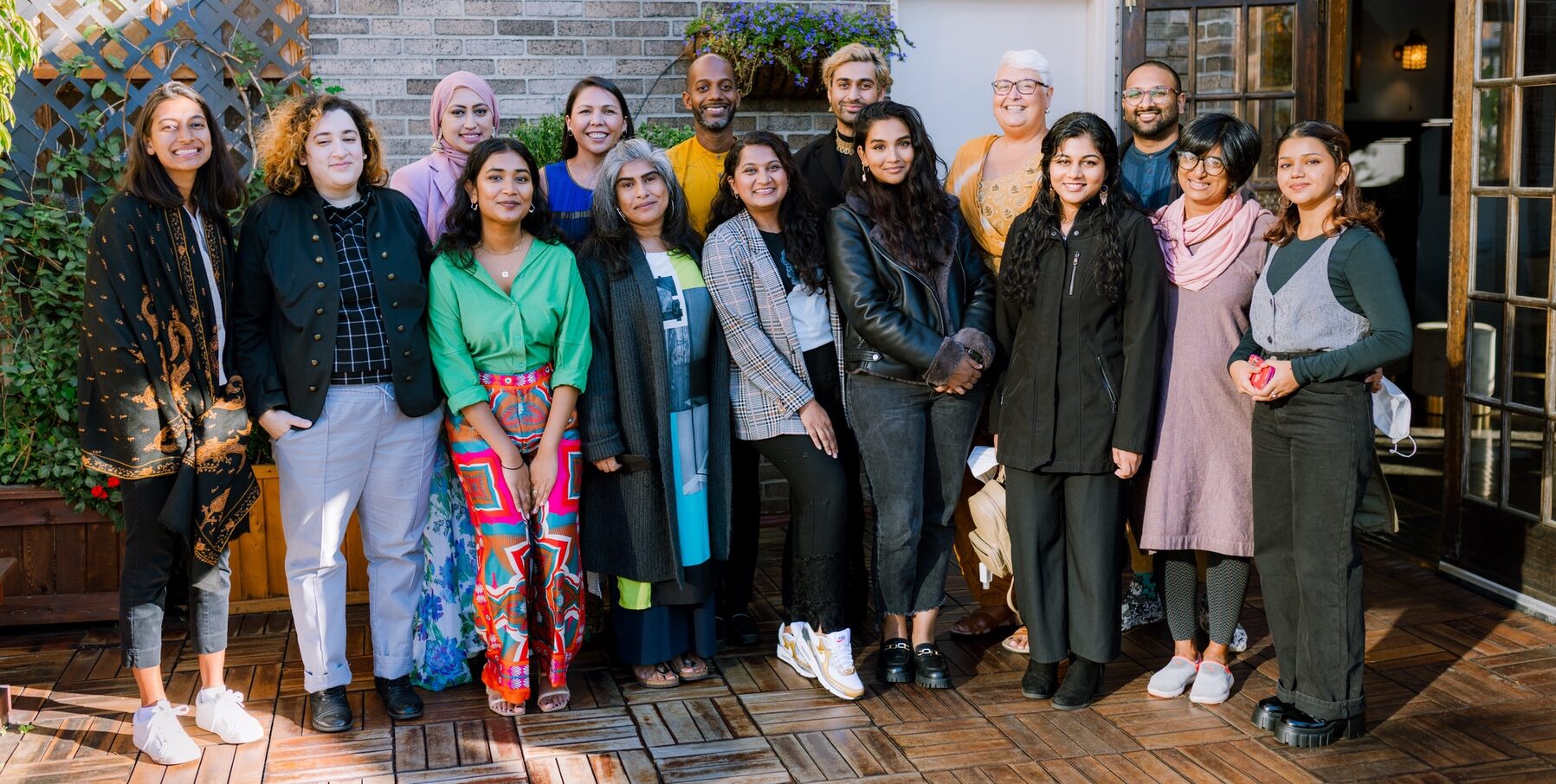
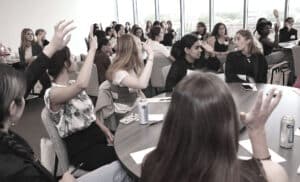
SAADA Archival Creators Fellows. Photo courtesy of SAADA.
SAADA’s Archival Creators Fellowship Program has supported twenty-four fellows over five years in sharing stories from South Asian American groups often marginalized or excluded from dominant narratives—including perspectives related to being queer, trans, incarcerated, undocumented, or Dalit. “These are the kinds of experiences that most people don’t get to hear,” Mallick says. The program underscores a fundamental reality: There is no single way to be South Asian American. By documenting these diverse stories, SAADA’s fellows expand the public record and create a more complete, equitable, and accountable cultural memory.
Memory Bucket: Storytelling through a Board Game
SAADA is now translating its archival mission and methodology into a new, readily accessible format—a board game appropriately named Memory Bucket.
Memory Bucket was inspired by community members seeking tools to help them uncover the untold stories of their families. As an intergenerational storytelling game, Memory Bucket is designed to lower persistent barriers to meaningful conversation. The game draws from SAADA’s ongoing First Days Project (est. 2013), which collects oral histories from immigrants and refugees recounting their earliest experiences in the United States.
Players of the game roll a die, select prompt cards, and share stories from specific times in their lives. This gameplay creates a unique space for families to share experiences and memories they may never have discussed before. Mallick recalls that when his nine-year-old daughter learned through the game that her grandmother had once taught herself to sew—a connection was established across generations that deepened their understanding of each other.
Reflecting on the strengths of Memory Bucket, Mallick underscores how the game “really helps deepen a relationship that you may already have.” Simple in principle yet powerful in impact, the game reveals how memory, readily shared in a playful, caring, and mutually supportive context, can strengthen the civic fabric among families, communities, and institutions—and even across generations.
Memory Bucket will soon be available to the public following the SAADA’s successfully funded Kickstarter campaign (the goal was exceeded by November 2025, but visitors can still contribute to the game’s projected release in early 2026).
From maintaining a comprehensive digital archive documenting the breadth of South Asian American life, to transforming oral-history methodology into an accessible, intergenerational board game, SAADA is redefining what it means to preserve and share community and American narratives. By catalyzing identity, memory, and storytelling—and by challenging incomplete public narratives—SAADA, as a living archive, is building more than a collective resource. Rather than a static entity, this archive is cultivating a dynamic culture of connection that strengthens community bonds and enriches the civic fabric. Through the pioneering work of Mallick and now so many others, SAADA continues to advance a shared civic responsibility and the belief that memory work is essential to building a more truthful, equitable, and inclusive American future.