Microscopic strands of sugar kelp spend their first six weeks in a hatchery, where they’re nurtured before being planted in the waters of Shinnecock Bay in Long Island. But the women of the Shinnecock Kelp Farmers believe the seedlings need more than the right temperature and growing conditions to thrive. They sing to them. They read them poetry.
Children participate in a “Kind Words Program,” offering encouragement to organisms too small to see with the naked eye. On one recent visit, a group of Catholic nuns gathered to pray over the seedlings before they began the work of helping restore the bay.
“We strongly believe in the frequency of women’s voices, encouraging them to grow,” said Tela Troge, a co-founder of the Shinnecock Kelp Farmers and the organization’s current executive director. “The strength and power that the prayers had for the seeds to do their job of remediating the bay. It was really incredible.”
The ritual may sound unusual, but it reflects the philosophy behind the collective’s work. Long before the kelp reaches the water, restoration begins with care.
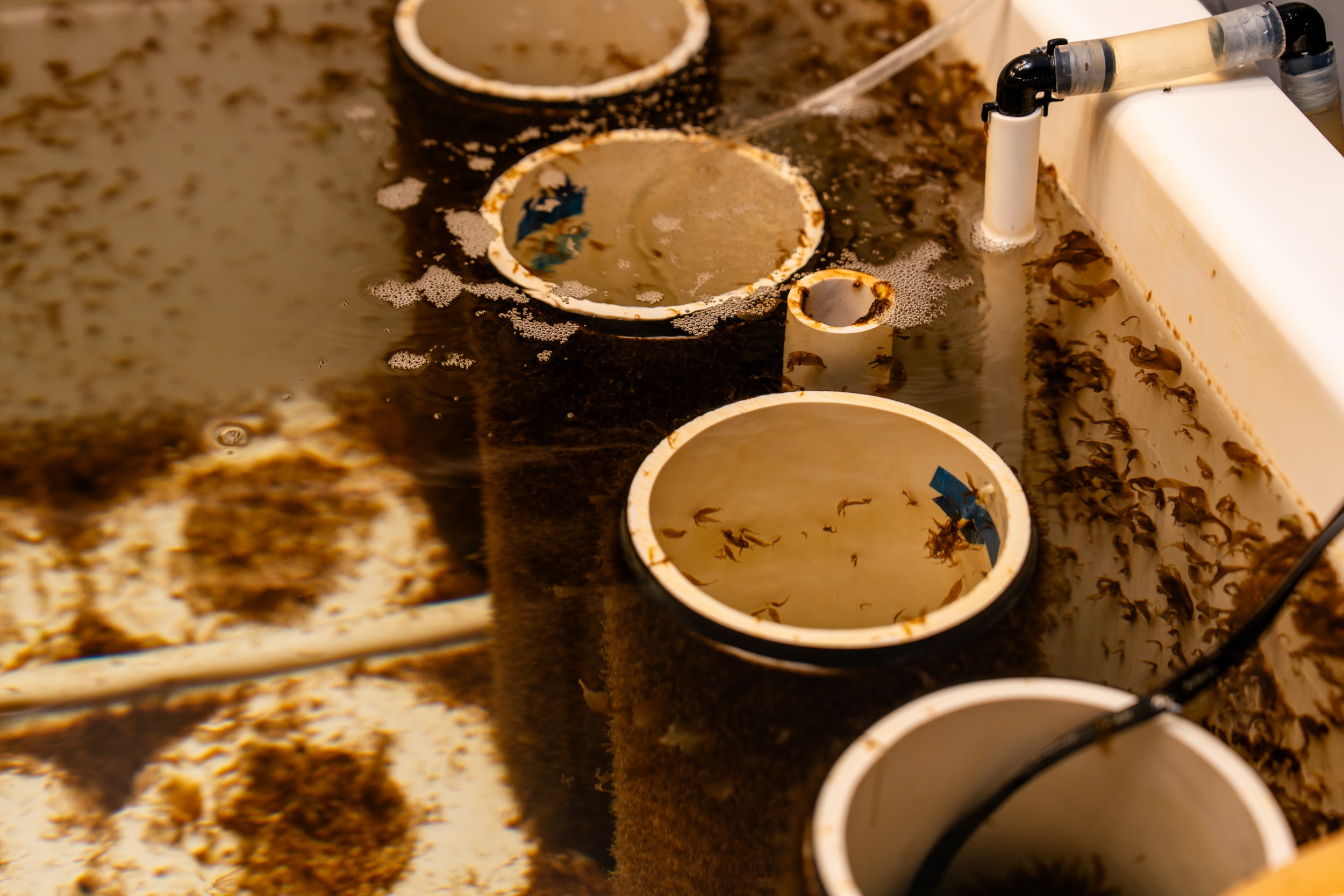
Sugar kelp in its’ earliest growth stage. Photo by Rebekah Phoenix for Henry Luce Foundation
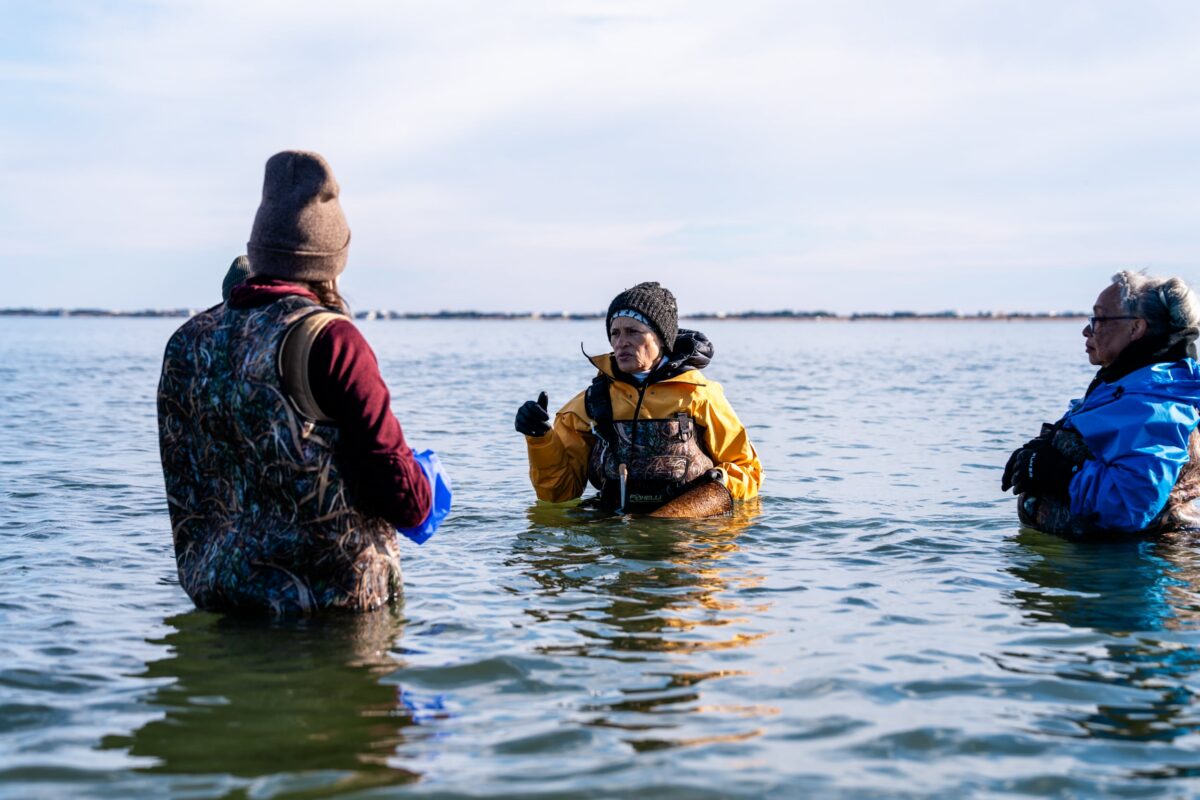
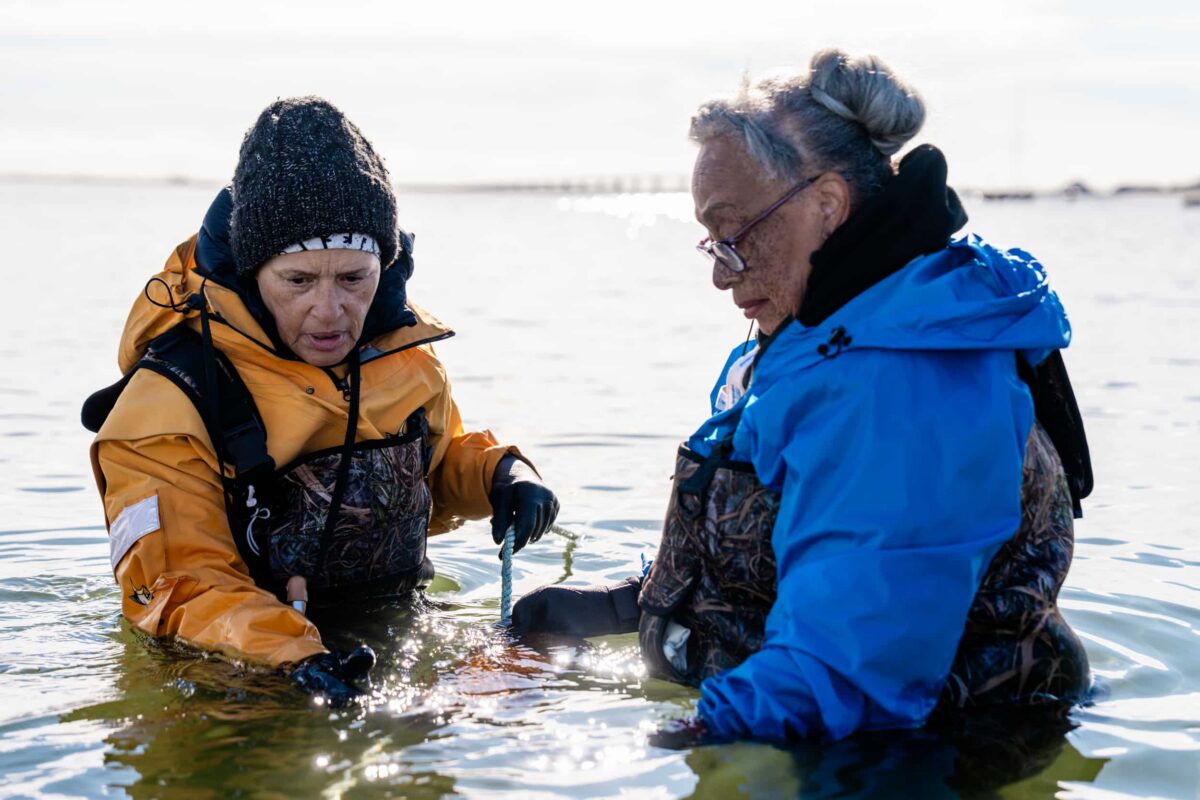
The hatchery is just the beginning. Once the sugar kelp reaches about two inches long, the seedlings are carefully wound onto 400-foot marine ropes and carried into Shinnecock Bay. Farming by foot rather than by boat, the women wade into the water at low tide in chest waders, securing the lines between anchors buried in the sandy bay floor. Through the winter, the kelp grows beneath the surface, absorbing nitrogen and helping revive the health of the bay.
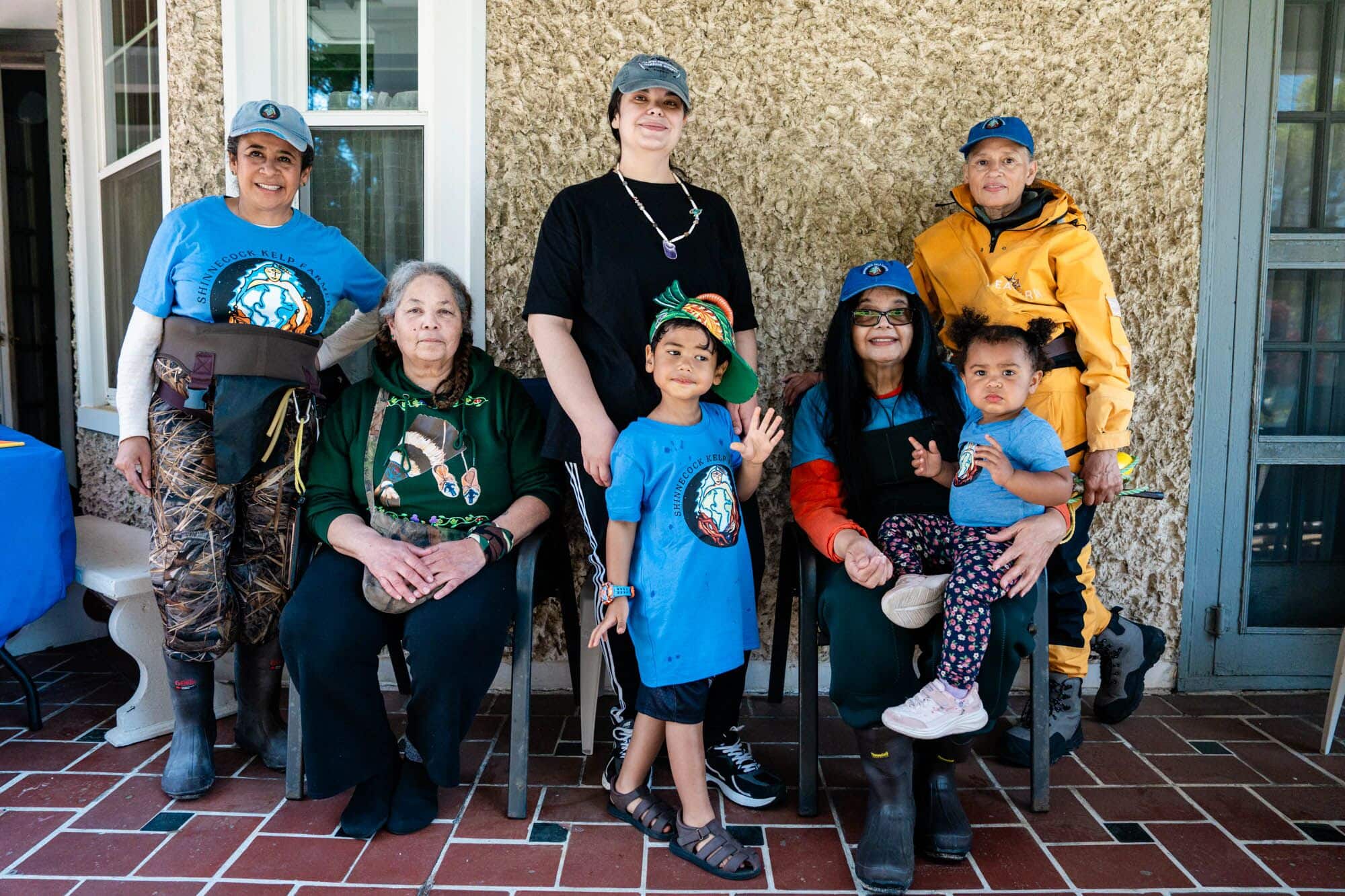
The five co-founders of the Shinnecock Kelp Farmers with the next generation. Photo by Rebekah Phoenix for Henry Luce Foundation
Founded in 2019 by six Indigenous women, the Shinnecock Kelp Farmers is a collective (five co-founders remain) working at the intersection of environmental restoration, cultural knowledge, and community well-being. The group, all members of the Shinnecock Indian Nation, operates with a mission that is both practical and deeply personal: revive the health of Shinnecock Bay while creating new opportunities for the people who have called its shores home for generations.
“This isn’t a case of applying outside expertise to a Native community’s problem,” said Raymond Foxworth, who leads Luce Foundation’s Indigenous Knowledge Initiative. “It’s Shinnecock women drawing on their own traditional ecological knowledge, and their own sovereignty, to heal a bay their families have depended on for thousands of years. That distinction matters enormously to us at Luce.”
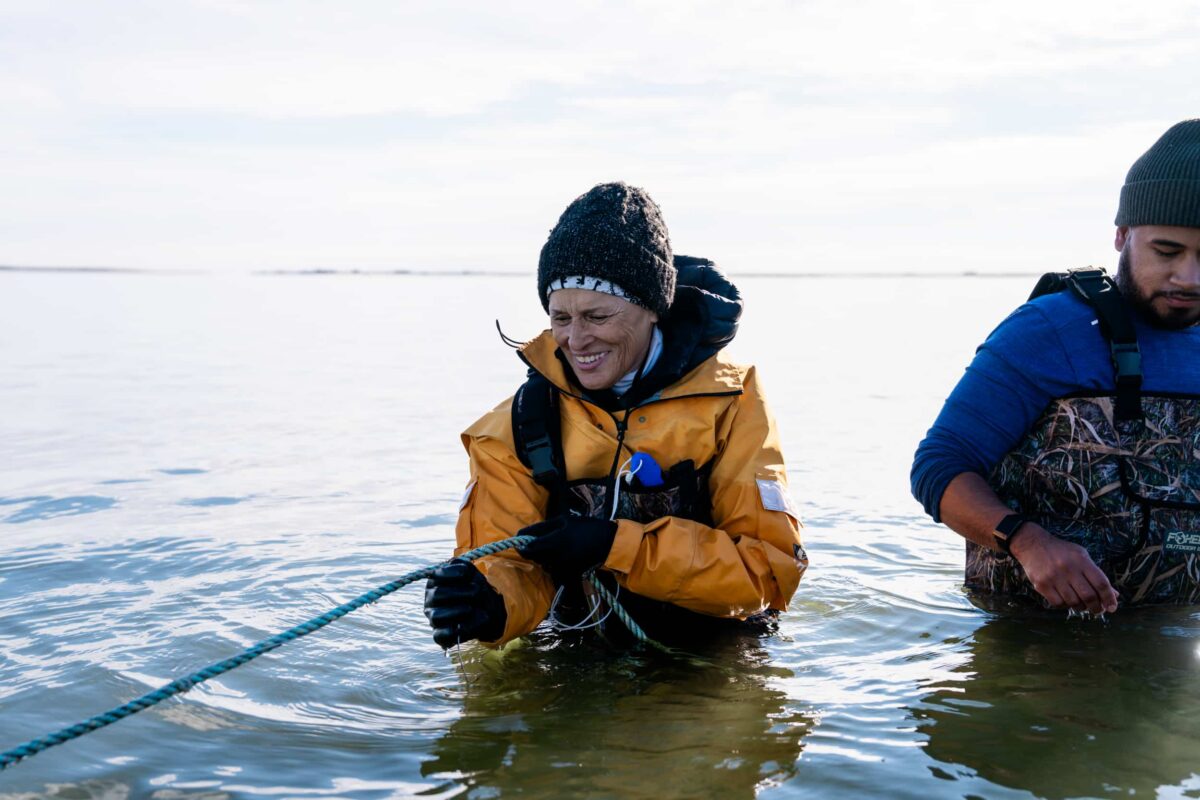
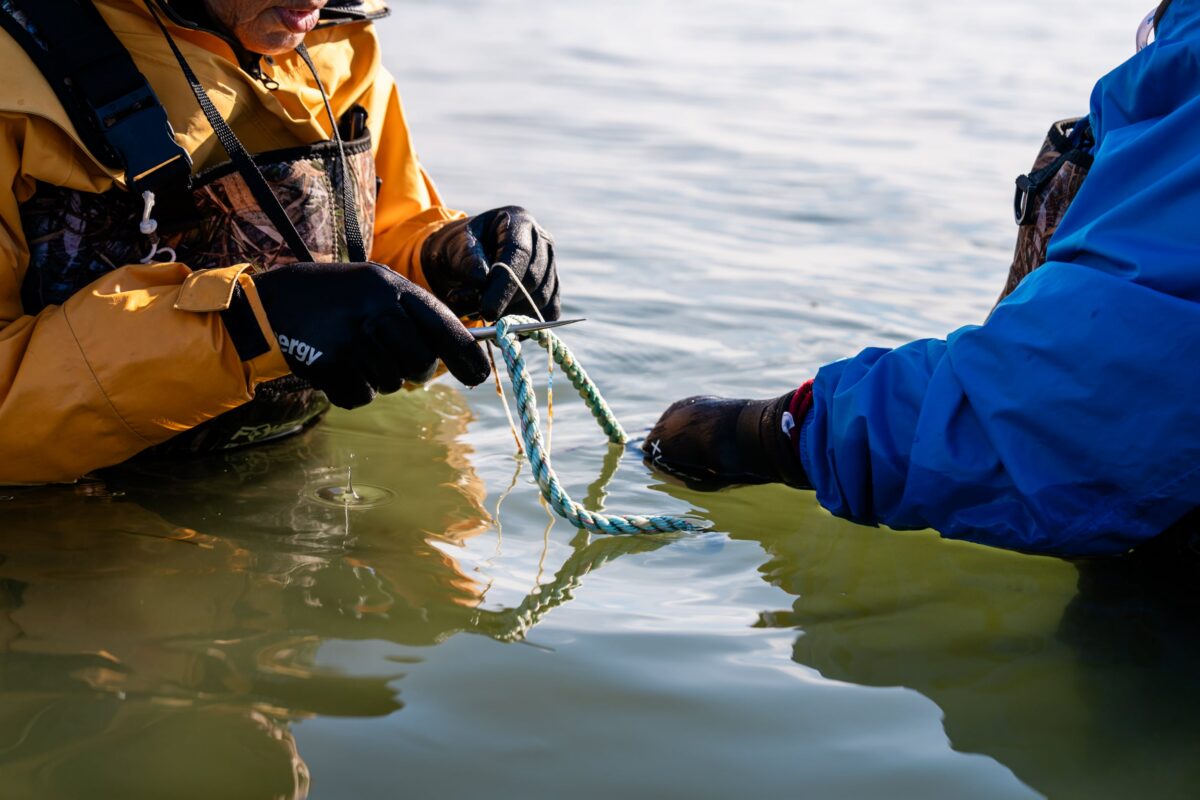
Over the past four decades, excess nitrogen from aging septic systems and surrounding real estate development has depleted oxygen in the bay, contributing to a large increase in the number of algae and devastating shellfish populations that once sustained the Shinnecock community. Sugar kelp offers one way to begin reversing that damage. As it grows, it absorbs nitrogen and carbon, helping improve water quality while creating habitat for marine life. The changes have been tangible. “We were told we would have to accept the extinction of Peconic Bay scallops,” Troge said. “That was unacceptable.”
Today, seahorses, mussels, oysters, sharks, and shorebirds are returning to waters where many had not been seen in years. For Troge, thirty-nine, those signs of recovery represent more than environmental progress.
“I’m probably the youngest on the team who remembers what the bays and the ocean used to be like before this catastrophic and devastating nitrogen,” she said. “What we’re really trying to do is regenerate and replenish our fisheries for the next generation.”
For Troge, restoring Shinnecock Bay isn’t about going back to an imagined distant past. It’s about recovering something she knew and witnessed firsthand.
Growing up on the Shinnecock Reservation, a peninsula that spans around 900 acres, the water was woven into daily life. “My grandparents would always tell me that it was okay that we don’t have any money,” she recalled. “We would always be able to survive off the bounty of the sea.”
The reassurance carried weight. Surrounded by extraordinary wealth on Long Island’s East End, many Shinnecock families lived with far fewer resources. Yet the bay offered something money couldn’t buy: food, recreation, and a deep connection to a place that had sustained the community for over 10,000 years. By the time Troge reached middle school, that promise had begun to unravel.
As growth accelerated across the East End, shellfish disappeared. Waters that had once been abundant became “just dead,” in her words. “It was horrible,” she said. “We never had a care in the world because you could eat anything you wanted for dinner from the bay. That was what we knew. And then, all of a sudden, it wasn’t.”
Watching those changes shaped more than her understanding of the environment. It influenced the course of her life. As a young woman, Troge planned to become a marine biologist. Instead, witnessing the political struggles surrounding the Shinnecock Nation’s fight for federal recognition and resources drew her toward the law. She became an attorney, believing that was where she could fight for her community most effectively.
Years later, she found herself back in the water. The work of the Shinnecock Kelp Farmers has become an unexpected meeting place for those two callings. Strengthening the bay is about improving water quality and rebuilding marine habitat, but it is also an expression of sovereignty and self-determination—a way for the community to care for its waters while shaping its own future.
“I’ve gone to law school. I’ve clerked for judges. I’ve worked at law firms. I’ve worked for my tribe,” Troge said. “But it’s really being out in the water… that’s the strongest way I’ve ever been able to completely exercise my tribe’s sovereignty.”
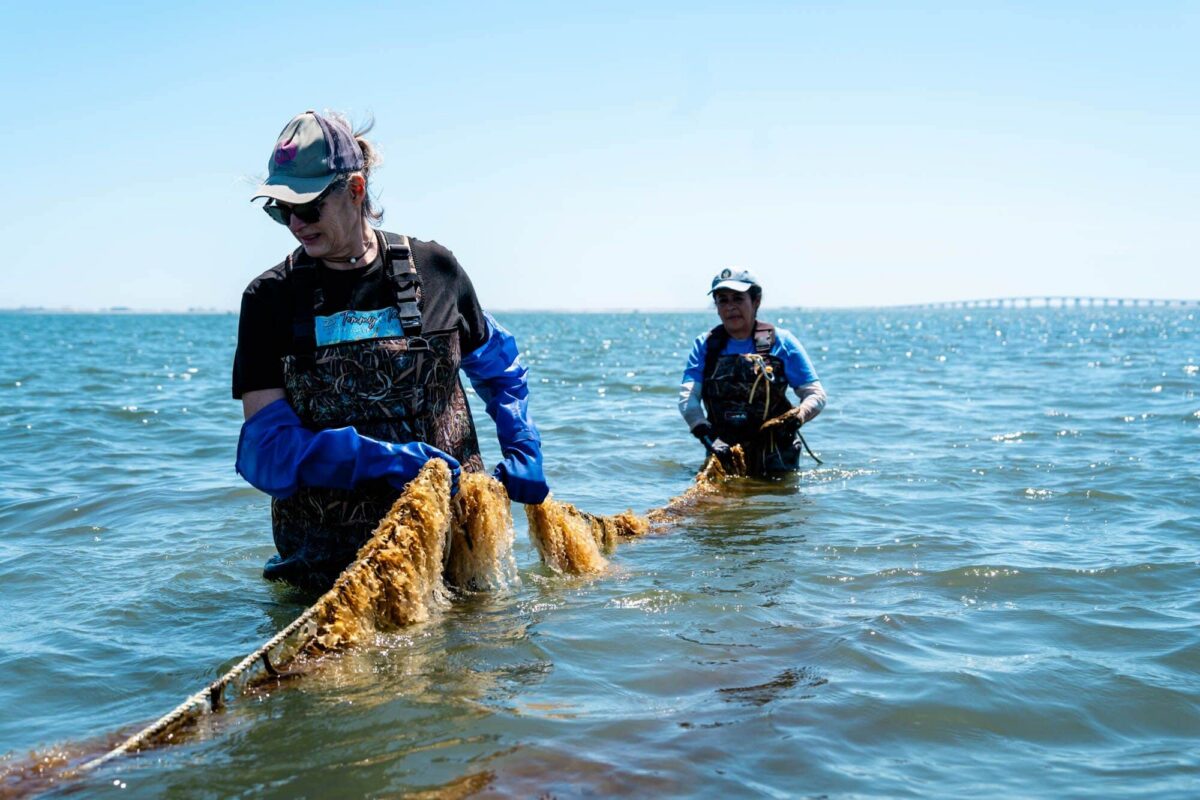
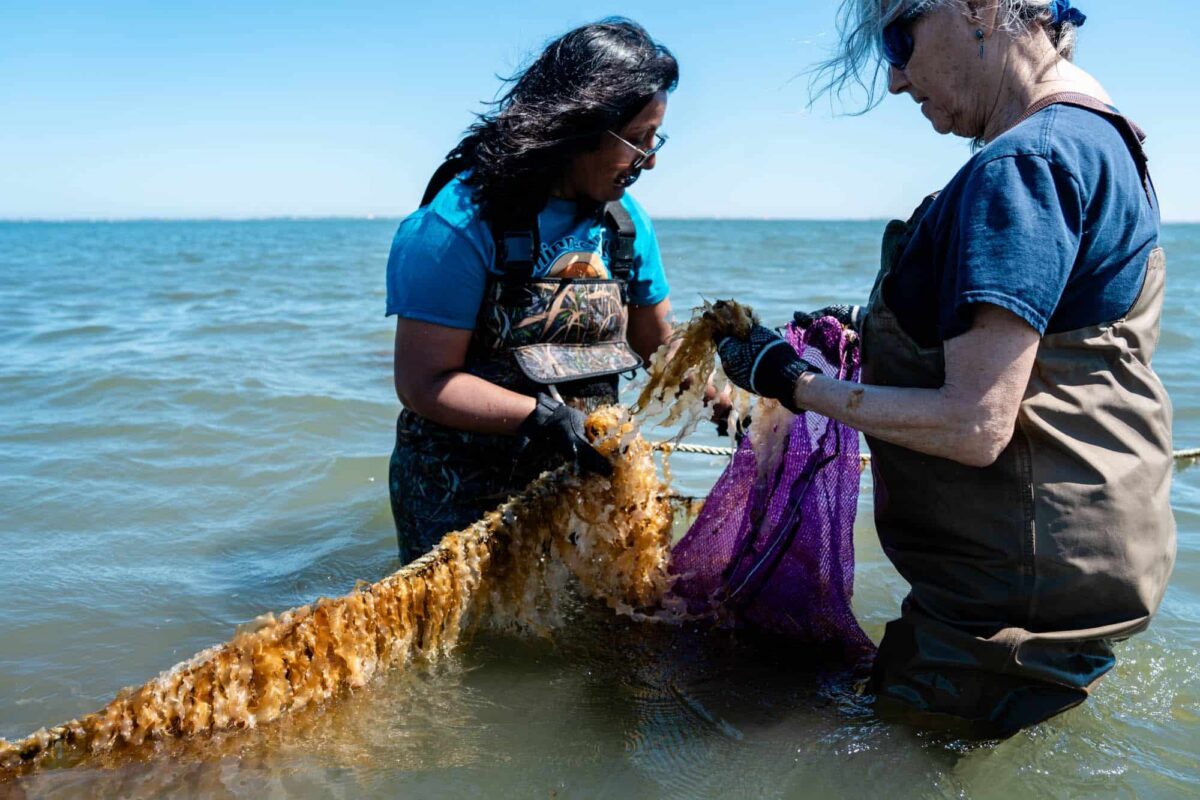
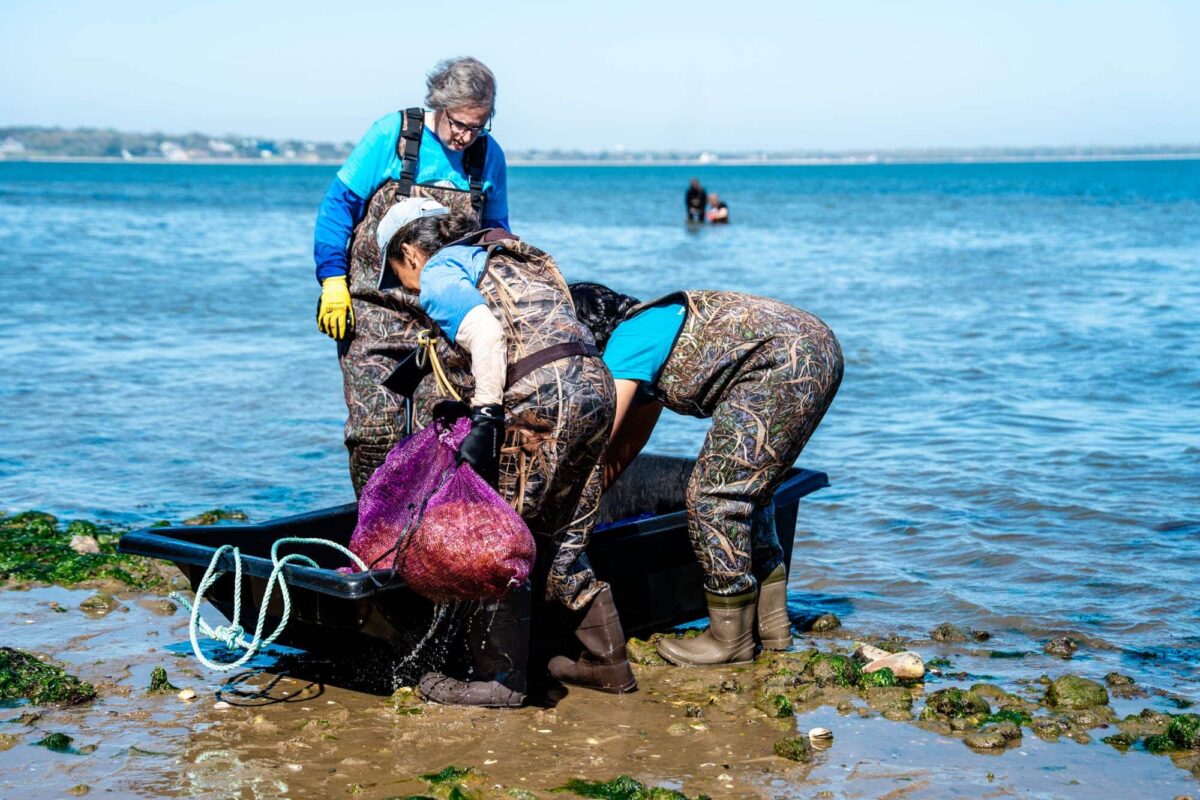
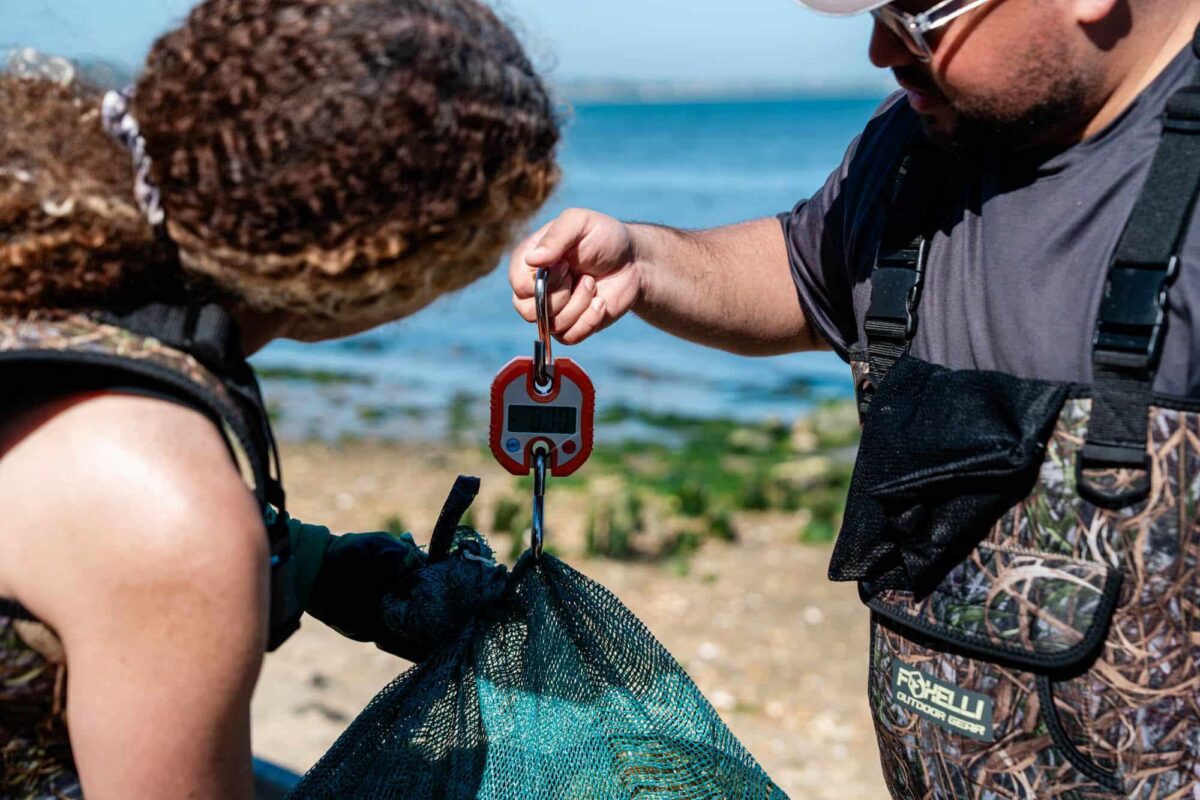
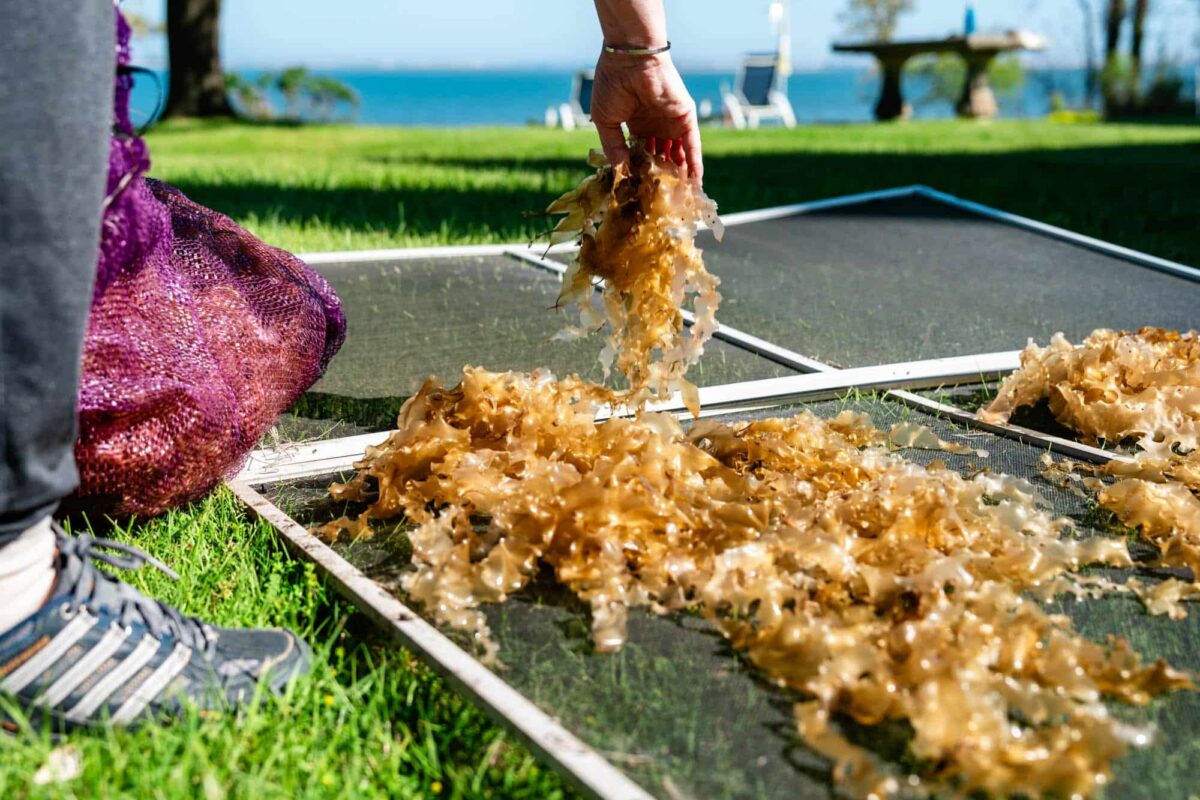
For the Shinnecock Kelp Farmers, running the farm is as much about the future as it is about the present. Young people are involved in nearly every aspect of the collective’s work, from helping care for the kelp in the hatchery to learning the science behind water restoration in classrooms. In partnership with educators and researchers, the collective has developed a K–12 curriculum that introduces students to photosynthesis, marine ecosystems, and the role kelp can play in improving water quality. The goal is not simply to grow more seaweed, but to cultivate the next crop of eco-warriors, scientists, entrepreneurs, and community leaders.
Tati Cosper, the Initiative’s senior program assistant, recognizes this cultivation as foundational. “Those kids aren’t just learning about kelp. They’re learning that they have a role in taking care of their bay, and that knowledge and responsibility get passed down together,” she said. “That kind of intergenerational work is incredibly exciting.”
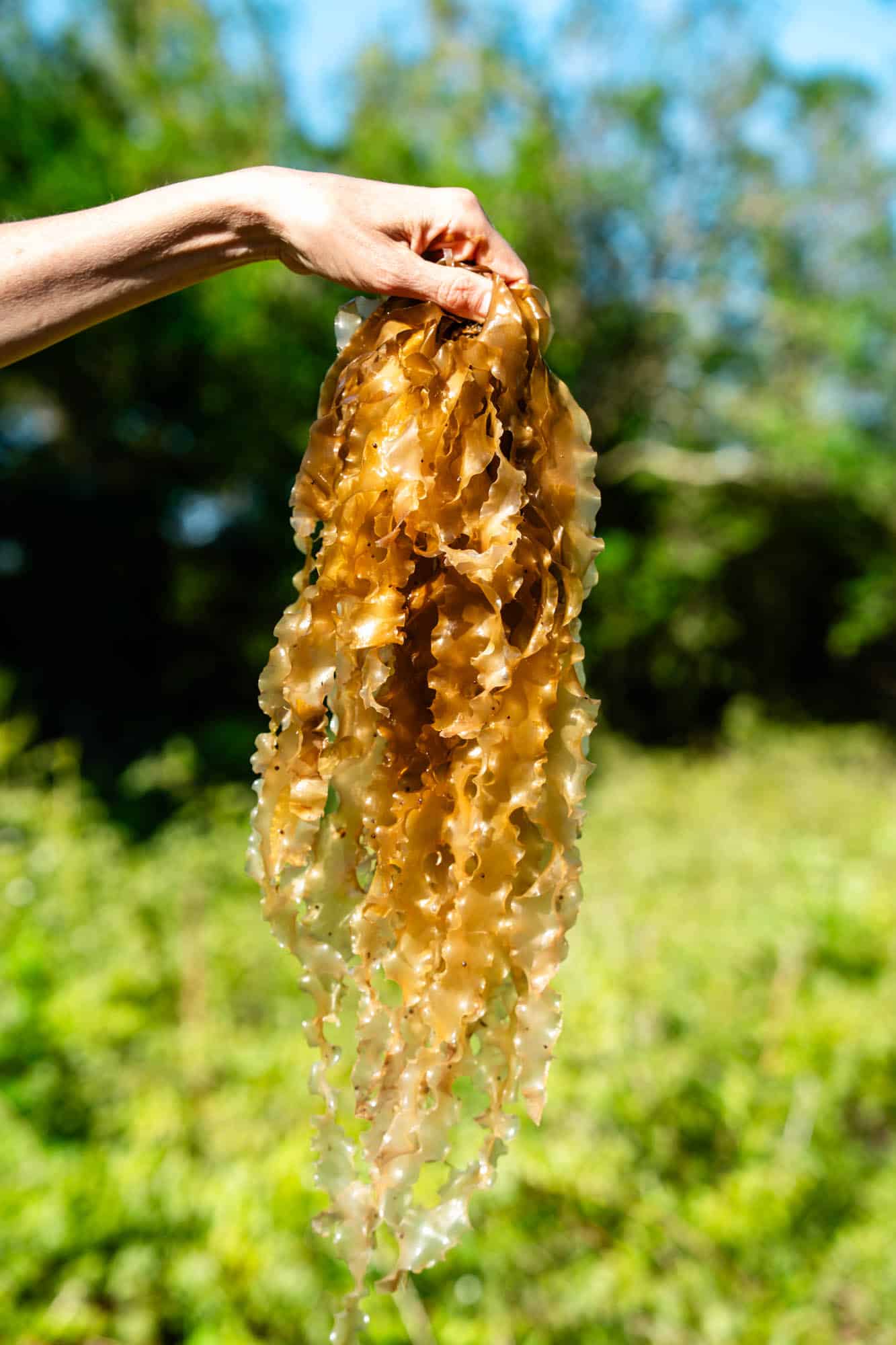
Sugar kelp after harvest. Photo by Rebekah Phoenix for Henry Luce Foundation
The collective is also helping lay the groundwork for a broader seaweed economy on Long Island. Plans for a processing center, expanded hatchery capacity, and free seed for future growers could create new opportunities for aquaculture while continuing the work of the kelp farmers. For Troge, economic development and environmental restoration are not competing priorities. They are inseparable. Healthy waters sustain healthy fisheries, and healthy fisheries help sustain families. And communities should be able to build livelihoods by caring for the places that nourish them rather than extracting from them.
Troge describes the work as healing—not only because the kelp helps restore water under strain, but because of what it means to return to the bay herself. “When you step out into the water, it feels like you’re being hugged and embraced,” she said. “It’s so healing. Not only for the ecosystem, but it’s also healing to the body to engage in aquaculture. It’s really beautiful and restorative.”
Troge missed the collective’s last two planting seasons while welcoming two daughters, both born in October. Now raising a new generation of her own, she often thinks about the ones that will follow.
Grant Details