“Did you know these have been around for 2,000 years?”
The Philippine sun, high in the morning, pelts the back of my neck as my group’s tour guide poses this rhetorical question. We’re walking through the Hapao Rice Terrace cluster just before harvest in the Province of Ifugao on the island of Luzon.
It seems like just about everyone cites that same number: UNESCO, Wikipedia, National Geographic, this tour guide. So, standing on the trail with the rice terraces stacked ahead of me, I have no reason to doubt it—except that the archeologist who has spent twenty years proving otherwise is right behind me, holding an umbrella.
I’d spent the last three days in his proverbial classroom.
Dr. Stephen Acabado has dedicated more than two decades to surfacing the true story of the terraces we found ourselves on.
The Ifugao Rice Terraces—a UNESCO World Heritage cultural landscape consisting of five clusters of terraces carved into mountainsides in the Cordillera—have long been taught in Philippine schools as evidence of an ancient, unbroken Indigenous civilization that escaped Spanish conquest by retreating to the highlands. The metric “2,000 years old” appears in textbooks, tourism brochures, and the stories Filipino schoolchildren are asked to memorize. According to the archaeological record Acabado has spent his career assembling, that numeric is almost certainly wrong.
Acabado’s radiocarbon dating, soil analysis, and excavation work—conducted in close partnership with Ifugao community organizer Marlon Martin—suggests the terraces are much younger: closer to 400 years old.
That’s the number that echoes in my mind when our guide says “2,000.”
The terraces themselves run in such tight, looping stacks up the mountainside that from below they read less like agriculture than like topography—like the land had simply been carved that way since time immemorial, rather than built in the 1600s. It is, I’d learned, an easy illusion to fall for. Almost everyone does.
This is the landscape, metaphorical and physical, the sixteen members of the 2025–2026 Luce Scholars cohort walked into during a multi-day immersion through Baguio, Kiangan, Banaue, and Hungduan—a sequence built, deliberately, to sit at the intersection of three of the throughlines that define the Luce Foundation’s work: a Leadership Program asking what kind of leaders these young Americans will become, an Asia Program asking what relationships across the Pacific should actually look like, and a commitment to engaging seriously with Indigenous communities and knowledge systems.
The Ifugao Rice Terraces, through Acabado’s work, tell a different story than the one of pristine isolation: not a people who fled Spanish contact, but one who used wet rice cultivation, introduced relatively late, to consolidate political power and successfully resist colonization while still participating, on their own terms, in the surrounding colonial economy. Martin, who has worked alongside Acabado for fourteen years and now serves as chief operating officer of the Save the Ifugao Terraces Movement (SITMo), pushed back on the word “escape” entirely. “They didn’t run away,” he said. “Constructing terraces—these are permanent things.”
“Archaeology is about hypothesis testing,” Acabado tells our group as we stop for lunch after a morning in the sun. “If there are new data sets that would point to an older date,” he continues, “then we change our model. But so far we have never found anything that would suggest rice was here older than 400 years.”
The Luce Scholars Program is premised on the same idea: that understanding is not innate. It has to be built, and rebuilt, often by confronting what you thought you already knew.
“What the Luce Scholars Program asks,” Aida Gureghian, who leads the Foundation’s Leadership Program, said, “is something harder than competence. It asks: can you listen to—or, perhaps, even hold—conflicting stories and perspectives, not in the name of agreement but of a deeper understanding? That is a leadership question. It is also, it turns out, an archaeology question—one that Stephen is trying to answer today.”
Acabado—who is himself a product of Luce Foundation’s support dating back to a 2007 Henry Luce Foundation/ACLS Dissertation Fellowship in East and Southeast Asian Archaeology and Early History and, now, as co-lead of the Foundation-funded Global Indigeneity Program—takes that responsibility seriously. The small, almost bureaucratic-sounding fact of a date upends a piece of national identity taught, unchallenged, in Philippine classrooms for more than a century. So, understandably, it came with significant pushback.
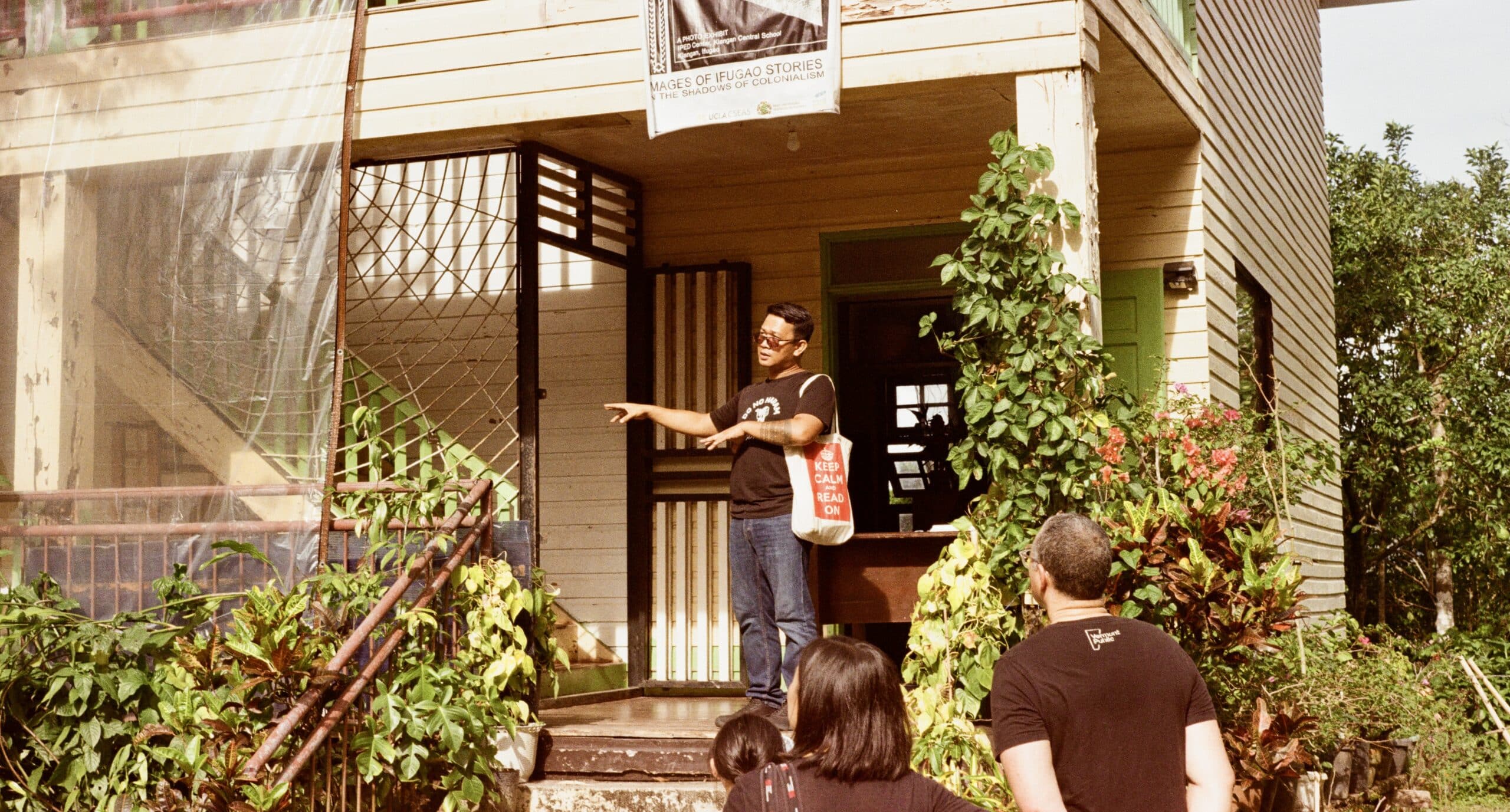
Marlon Martin at the Ifugao Indigenous Peoples Education Center. Photo by Henry Luce Foundation
Whose Authenticity?
The resistance to his findings, Acabado is careful to note, has never come from the Ifugao farmers themselves. “If you ask my grandmother, it wouldn’t even matter to her,” Martin agreed. Ifugao timekeeping doesn’t run on centuries, he told us; it runs on generations, on lineage, on the recall of those who can recite ancestry back ten generations. When Acabado and Martin cross-referenced Acabado’s archaeological dating against Martin’s community’s generational counts drawn from sacred oral narratives—the story of two brothers who traveled to the sky world and returned with rice and detailed instructions for building the first terraces—the two methods converged within a margin any historian would call remarkable. Science and Indigenous knowledge, set side by side rather than in opposition, had arrived in roughly the same place: the terraces were constructed just about 400 years ago.
The resistance, instead, has come from the institutions built on the older story: nationalist historians invested in an unbroken 2,000-year-old pre-colonial Filipino identity; a tourism industry whose brochures and tour guides depend on the number; and a UNESCO heritage framework that prizes what it calls “integrity”—the idea that a landscape, once inscribed, should not meaningfully change.
Martin argued that UNESCO’s framework is its own kind of colonial inheritance. “The concept of authenticity, as far as UNESCO is concerned, is a Western definition,” Martin explained during a panel discussion in Banaue. “It’s a European definition applicable to the landscapes of France, of Italy, of Spain. We have a totally different landscape here.” Under the original heritage listing, a rice terrace that had, over generations, shifted into a house platform or a vegetable garden in response to economic pressure—exactly the kind of adaptive, living change that has defined Ifugao land use for centuries—could be read as a violation of the site’s “integrity.” In 2001, the Ifugao Rice Terraces were placed on UNESCO’s List of World Heritage in Danger. It took more than a decade to come off it.
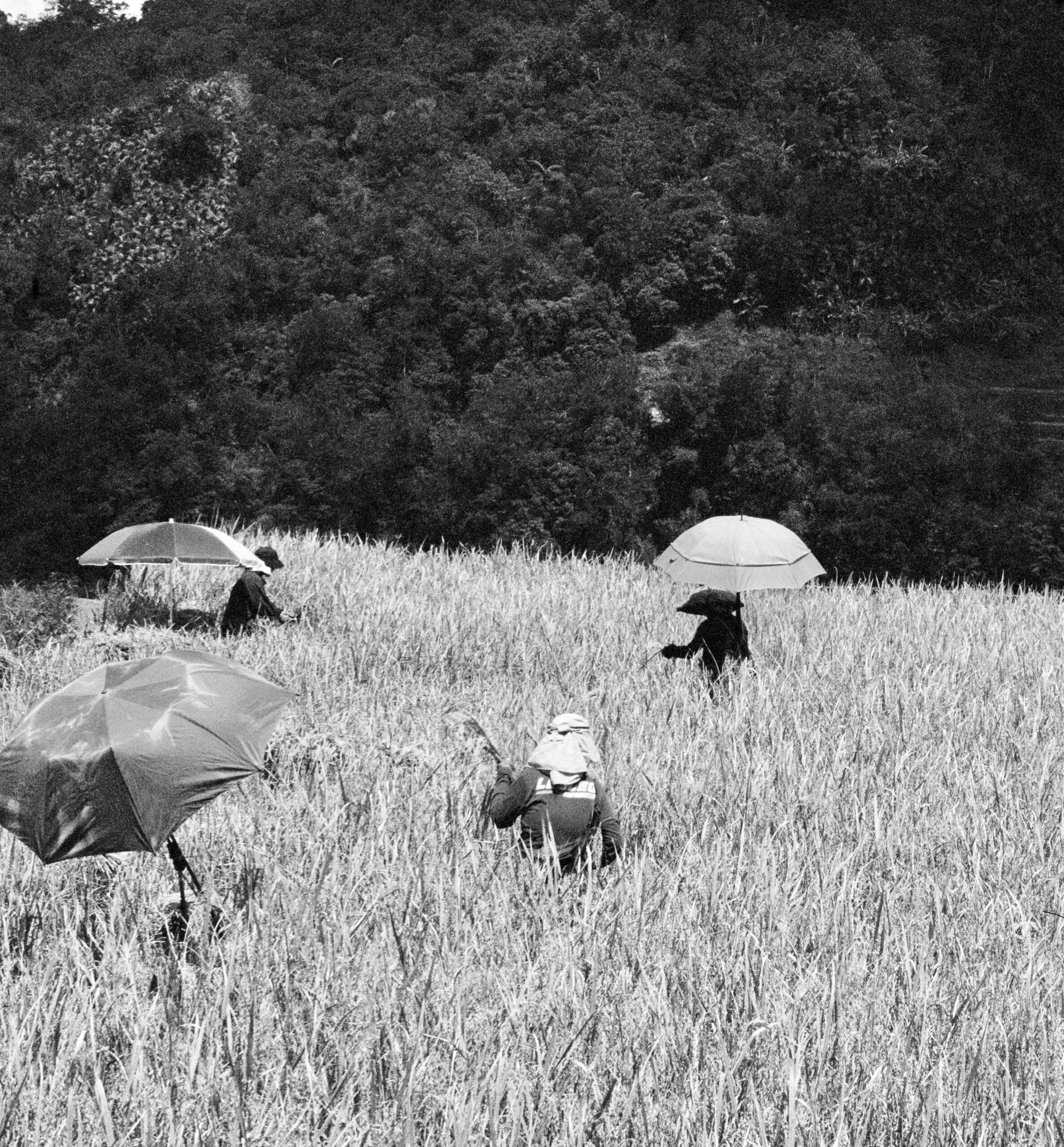
Farmers harvesting rice on the Ifugao Rice Terraces. Photo by Henry Luce Foundation
Why Maintain What Doesn’t Pay?
To complicate the matter further, the terraces at the center of both the trip and the debate, by the numbers Martin cites, are not economically rational to maintain. The rice grown there feeds, at most, five percent of the local population, and a harvest typically sustains a family for four or five months. In 2024, Martin’s organization surveyed Ifugao farmers to ask, plainly, why they keep doing it. The answer that came back first wasn’t economic. It was a word, tawid—an inherited legacy, an obligation to care for something and pass it on better than it was received. Subsistence came second.
“Our being Ifugao comes first before our being Filipino,” Martin told us. “You cannot be a Filipino without being an Ifugao.” Tawid doesn’t ask whether a terrace is economically rational, he said. It asks who comes after you, and what you owe them.
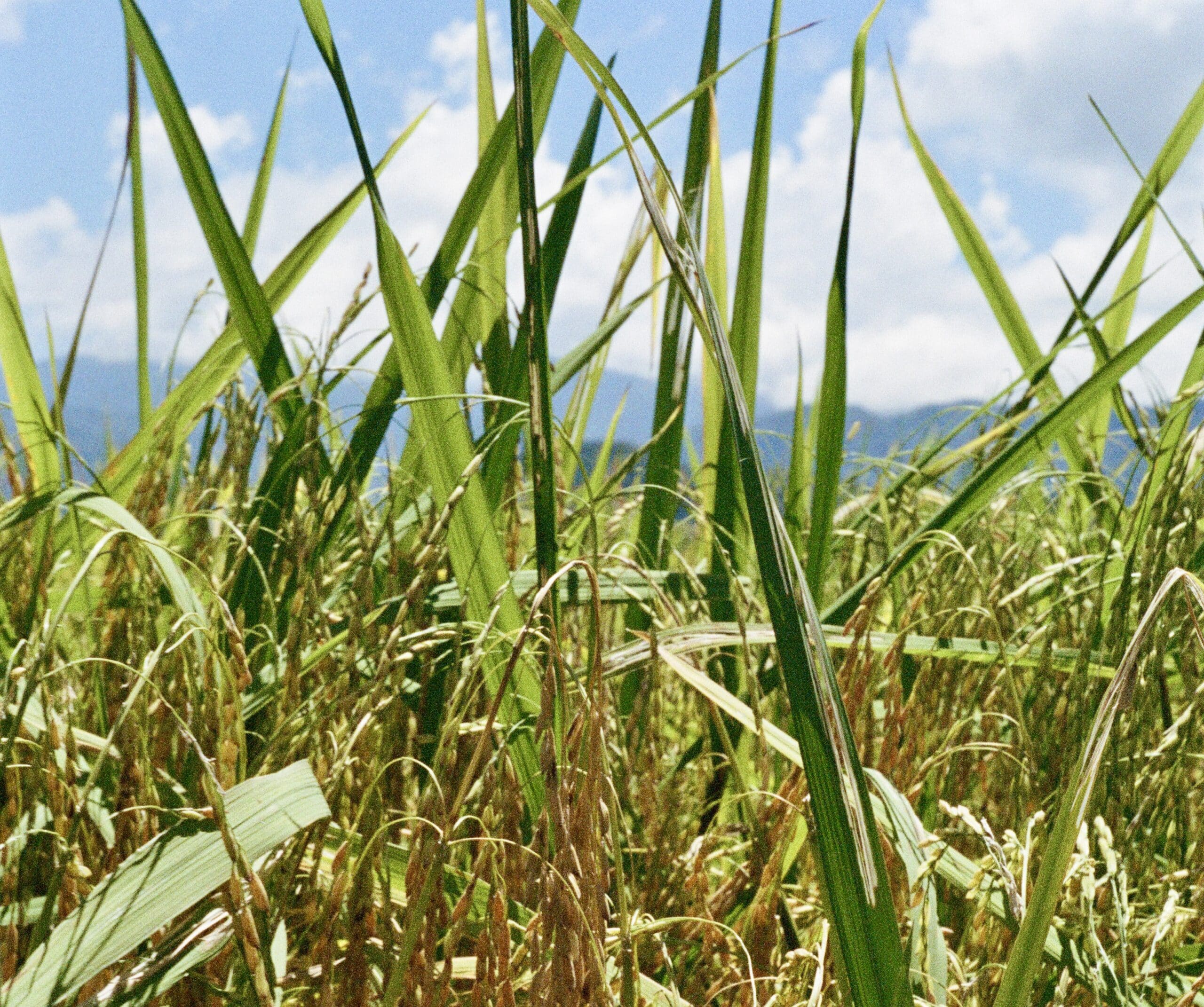
Rice on the Ifugao Rice Terraces. Photo by Henry Luce Foundation
What Does the Hillside Ask?
“Luce Scholars don’t travel to Asia to confirm what they already believe,” Henry Luce Foundation President and CEO Jonathan Holloway told me. He, too, joined the Scholars on the immersion. “If anything, the opposite. Stephen and Marlon’s work is a reminder that even the facts a country teaches its own children can be wrong, and that getting it right is slow, unglamorous, collaborative work. That’s incredibly challenging to reckon with. Standing among the terraces with this cohort of Luce Scholars, that challenge feels full of opportunity.”
The itinerary itself leaned into that challenge. Our trip bracketed the Cordillera immersion with sessions in Manila alongside Maria Ressa, the Nobel laureate and Rappler co-founder whose work defending press freedom in the Philippines has made her one of the country’s most consequential, and most targeted, public figures. The juxtaposition was not subtle: a conversation about disinformation and the fragility of truth in Makati bookended a week spent learning how a “fact” repeated for a hundred years in school textbooks could simply be wrong, and how long, slow, patient work is required to correct it. Both Acabado and Ressa pointed to trust as a key.
“Building trust took time,” Acabado said of his early years working with Martin’s organization. It was three years, by his own count, before SITMo’s board agreed to let him near a shovel. It then took decades of digging, revising, and being told they were wrong until the American-trained archaeologist and Ifugao community organizer were trusted to share the harder, truer story.
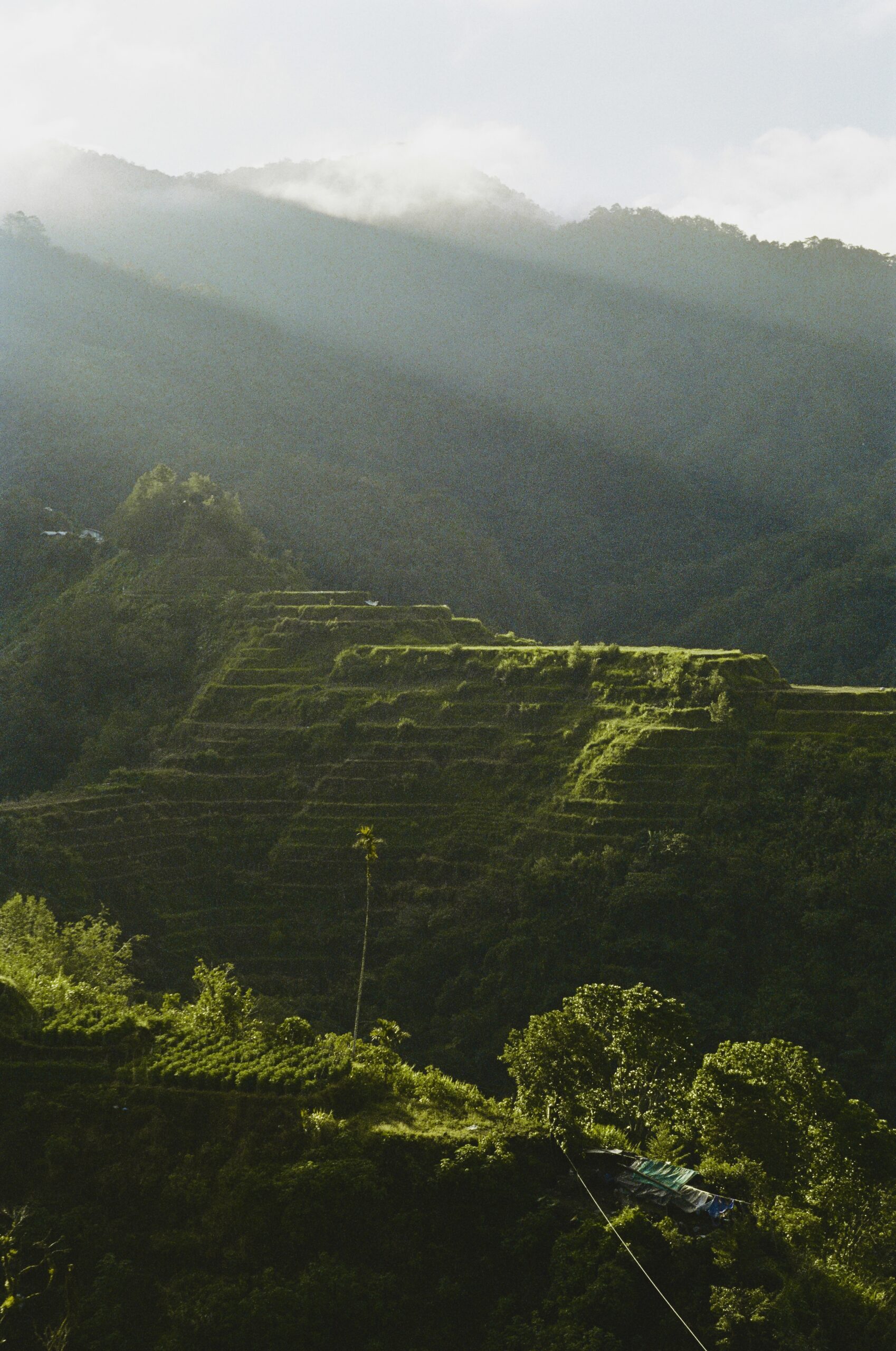
Photo by Henry Luce Foundation
By afternoon, the light across the terraces goes flat and gold, and everything looks older than it is. Young children run by, daring my footing to hold, and I wonder what story about these terraces this next generation will grow up hearing—what story the terraces might tell them, and who will be there to witness it.
It is hard not to hear a line from James Baldwin’s Nothing Personal, part of a passage Jonathan Holloway quoted earlier in the trip: “the light is always changing.”
The story of these terraces is not a single act of trust. It’s the willingness to keep holding on, season after season, long enough for something truer to reach the surface. Standing in Banaue among a cohort of young leaders, water moving past my ankles toward the next tier down, it is easy to believe the story has only just begun.