Across the sun-scorched plains of northern Kenya, where acacia trees mark the horizon and skies stretch endlessly, memory of the land runs deep. But beneath this beauty lies a contested landscape. Colonial-era ranches still parcel off the greenest pastures. That reality is no more apparent than for the pastoral Maasai, who have shepherded their cattle across this terrain for centuries, their steps guided mainly by the stars and Indigenous memory—not maps or fences.
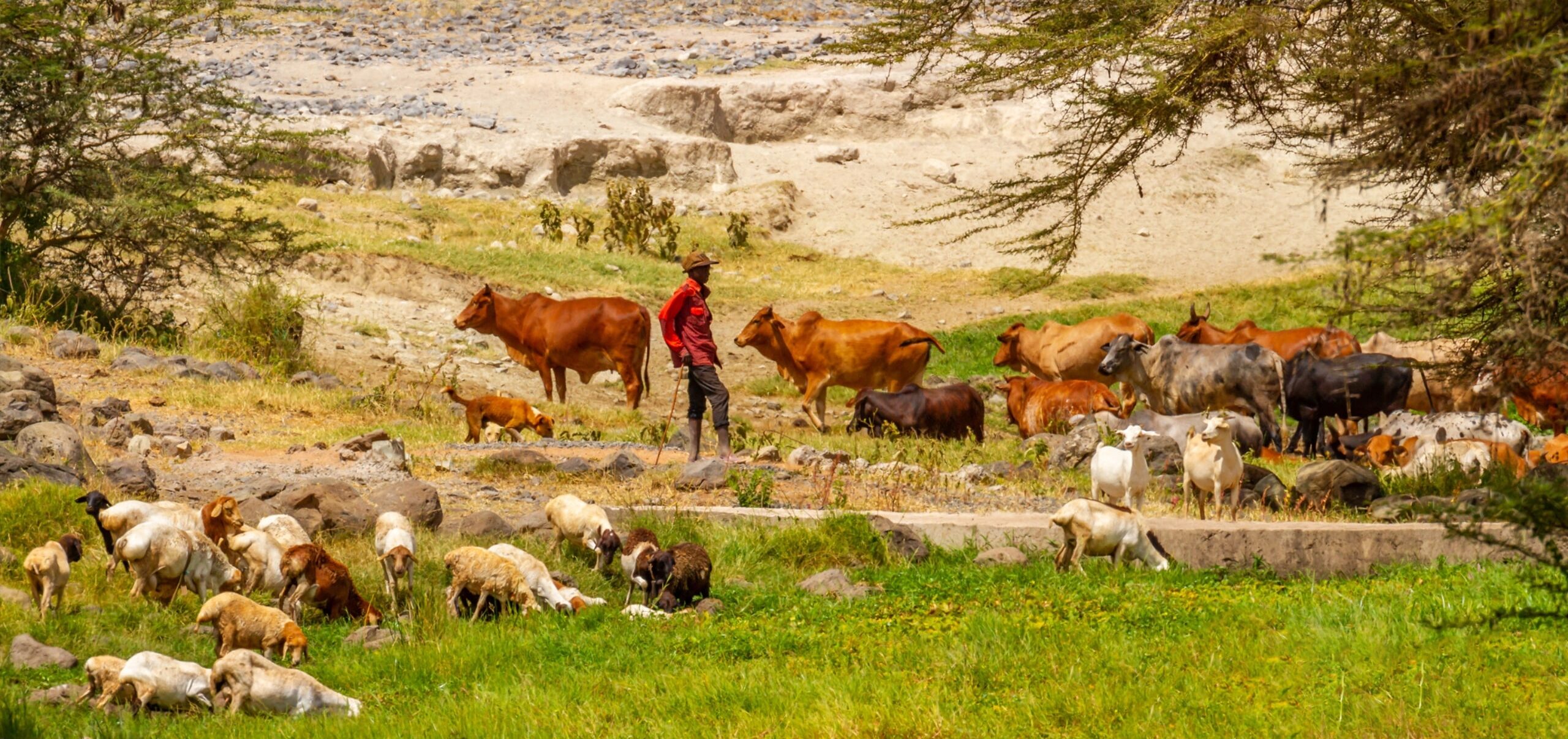
Photo courtesy of IMPACT Kenya
Among those turning such ancestral knowledge into a new kind of civic power is Malih Ole Kaunga, founder of the Indigenous Movement for Peace Advancement and Conflict Transformation (IMPACT Kenya). IMPACT is a non-profit organization working at the intersection of Indigenous rights, land protection, and cultural preservation since 2002—and recently supported by the Henry Luce Foundation’s Indigenous Knowledge and Democracy, Ethics, and Public Trust programs.
“I grew up herding my father’s cattle, tracing the same routes our ancestors once walked,” Ole Kaunga recalls. “It´s our land, yet we could only graze our cattle at the edges of these fenced-off ranches. We were detained many times. It felt like we were being punished for just existing.”
For Ole Kaunga, what began as an experience of exclusion would come to spark a lifelong mission: to reclaim ancestral land and preserve Indigenous heritage. The journey began when Ole Kaunga founded the youth movement, Organization for the Survival of IL Laikipia Maasai Group Initiative (OSILIGI), its acronym purposely spelling out the word “hope” in Maasai. This charitable movement (it has since been absorbed by Together with Kenya) laid the foundation for IMPACT.
“We are preserving the history of our struggle,” Ole Kaunga explains. “The protests, the court battles, the youth movements, the diplomacy—all are part of our living archive. We carry the ancestral knowledge in our bodies, in our stories, songs, and ceremonies.” For Ole Kaunga, every protest and every journey across the plains becomes an individual act of archiving, the community’s endurance cumulatively inscribed into the land itself.

Photo courtesy of IMPACT Kenya
Ole Kaunga has spent decades with IMPACT transforming communities across northern Kenya. This often takes the form of helping others register ancestral lands to acquire title deeds and legal recognition, such as under the country’s Community Land Act, of 2016. Such achievements mark a milestone in the evolution of a community’s growing powers of self-determination; still others are provided a model of justice grounded squarely in Indigenous knowledge.
A Caravan of Hope
Since 2013 IMPACT annually convenes its Camel Caravan, a five-day trek of over twenty kilometers along the Ewaso Ng’iro River—the very lifeline of South Kenya. Elders, youth, and herders walk together with their camels, retracing ancestral routes that once linked communities across the region’s drylands. At once ritual and dialogue, the procession revives ancestral memory while addressing today’s shared challenges such as water scarcity, environmental pollution, land grabbing, and unconsented development.


IMPACT’s influence today extends well beyond Kenya, inspiring regional collaboration among Indigenous groups in East Africa and beyond, such as Tanzania’s Pastoral Women’s Council (PWC, est. 1997). In addition Ole Kaunga and his colleagues regularly engage in policy dialogues and international forums on land rights, peacebuilding, and climate resilience, helping to raise public consciousness and linking local experience to global understanding.

Grant Details