While the executive order dominated headlines, many of The Shape of Power’s quieter stories were overshadowed. This section revisits the artists and communities whose narratives often remain at the margins of public memory, reminding us that reshaping our understanding of history requires intentional acts of remembrance.

SONYA CLARK
Weaving Truth into Power
A longtime force in contemporary art, Sonya Clark has spent decades unraveling the entangled threads of American history. She explores identity, race, and language, and uses common items that carry both personal and cultural weight. For example, cloth, currency, and hair make frequent appearances in her pieces. Clark’s work encourages us to ponder the memories embedded in materials—and what we choose to forget. “I mine the past to see what stories have been erased or obscured and what needs to be illuminated. As an American artist, one driving force in my practice is to highlight unfreedoms and freedoms.” she says.
Clark was born in Washington, D.C., to a Jamaican mother and Trinidadian father, and her work is deeply informed by diasporic identity and ancestral knowledge. “The seed first planted about the power of everyday objects was when my grandmother taught me to stitch as she told me stories. That was 50 years ago. Each prick of her needle left a trail of stitches, like words on a page. I believe every object has an etymology; its linguistic word history and also how it is tied to culture,” says Clark, who is now a Professor of Art at Amherst College. Whether she’s celebrating Black hairstylists or assembling portraits from combs, she transforms familiar symbols into tools to confront the past and imagine the future.
Her 2018 sculpture Octoroon, on view in “The Shape of Power” exhibit at the Smithsonian American Art Museum, brings these ideas into sharp focus. The title references an outdated and dehumanizing term used to describe someone who is one-eighth Black—a concept born from the caste systems of slavery and segregation. In Octoroon, it becomes a powerful medium for critiquing the absurdity of racial classifications. “Octoroon speaks to the one-drop rule prevalent in white supremacist ‘pure race’ fascist ideology,” Clark explains. The piece, an “American flag” that replaces stars and stripes with cornrows and hair, is delicate, tactile, and intentionally unsettling. “Octoroon is stitched with thread on an unprimed cotton canvas. One eighth of the threads are braided into cornrows as a racial mapping of people with European and African ancestry who were called “octoroons” because of a Black great-grandparent,” says Clark.
While the piece references a specific historical context, its themes still resonate. In an era when conversations about race and history are being suppressed, Octoroon invites viewers to sit with discomfort. Through works like Octoroon, Clark continues to shape conversations around memory, visibility, and the power dynamics. Her art doesn’t offer easy answers, but it definitely demands attention.

GABRIELA MUÑOZ AND M. JENEA SANCHEZ
Building Monuments to Borderland Labor
Artists Gabriela Muñoz and M. Jenea Sanchez understand that labor is not just physical—it’s cultural, emotional, and deeply tied to identity. Based in Phoenix and Chandler, Arizona, respectively, the duo’s collaborative practice is rooted in the U.S.–Mexico borderlands they’ve both called home. Their mission: “To create works, experiences, and spaces that challenge dominant narratives about the border and invite others to imagine new ways of belonging across social divides,” says Muñoz. The art they produce, often collaborations with women artisans from the region, sheds light on how domestic labor, migration, and craft make up the fabric of daily life.
Their ambitious sculpture Labor, featured in “The Shape of Power,” was first created in 2016 as a 30-foot-wall, built from 300 handmade bricks produced by DouglaPrieta Trabajan, a grassroots collective in Sonora, Mexico. Labor honors women whose work, whether at home, in factories, or fields, sustains families and communities but is too often overlooked. As the artists describe it, “The piece honors the women’s labor and their self-determination in producing bricks with their neighbors and family to build their gathering center.” Many of the participants still collaborate on other projects to this day.
Muñoz and Sanchez first met in graduate school at Arizona State University and began working together after realizing their shared cultural roots and artistic priorities. “From the beginning, we recognized something in each other, grounded in commitment to our communities and the willingness to challenge narratives,” says Sanchez. Both women were raised in families shaped by migration and binational life. Muñoz is originally from Chihuahua, Mexico, and she immigrated to Arizona as a teenager. Sanchez was born and raised in Douglas, near the Mexican border. Their shared experiences fuel a practice that blends photography, sculpture, installation, and community-based work. “I believe that the most powerful stories and truths come from within communities themselves, not from outside interpretations,” says Sanchez.
Together, they co-founded the Frontierizx Collective, a team of artists that uplifts women in Borderland communities in Mexico, celebrating their craft and their stories. For Muñoz and Sanchez, sculpture is not just a form—it’s a way of enshrining resilience, dignity, and connection.
CATHY LU
Reimagining the American Dream
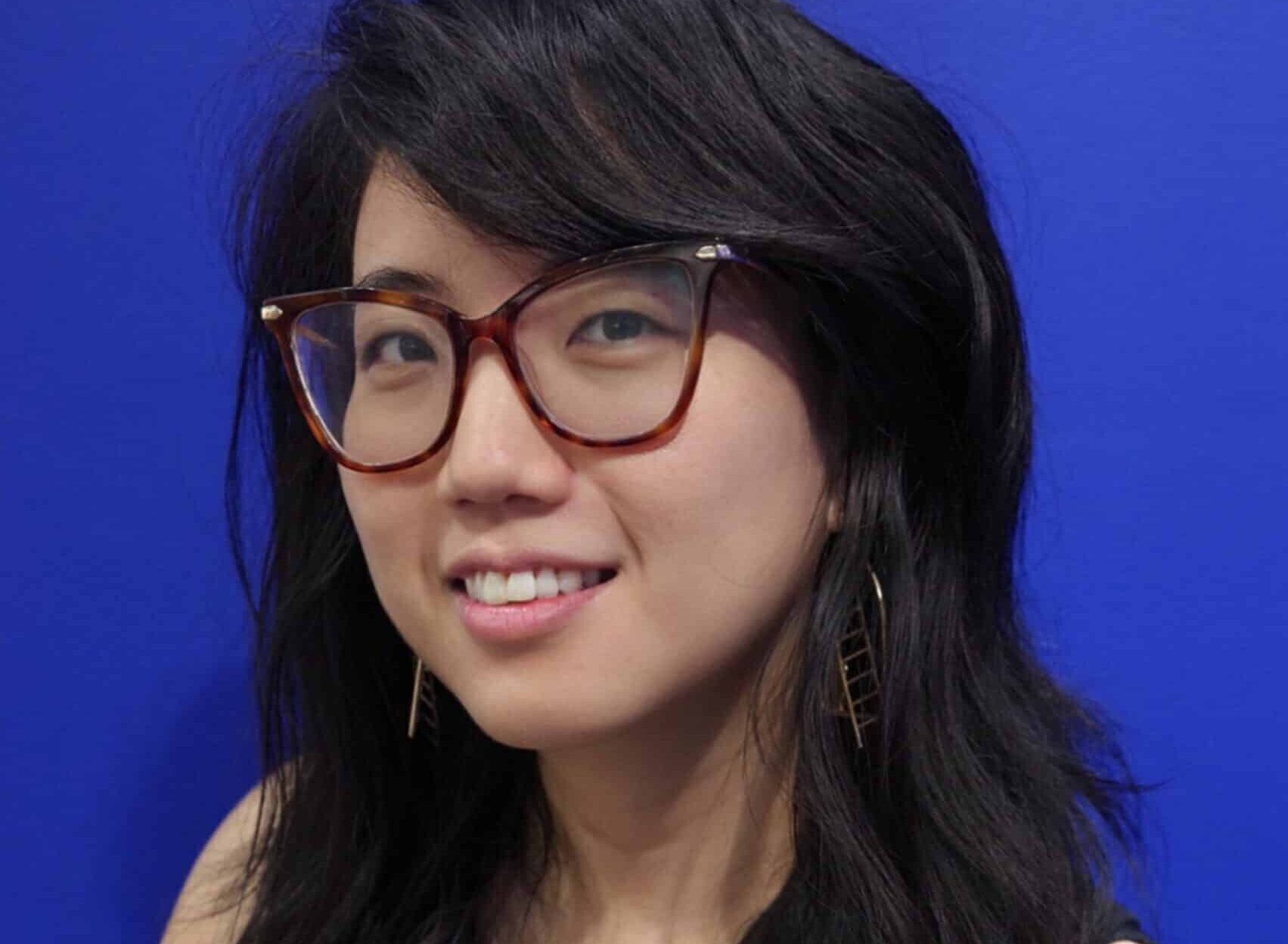
Cathy Lu uses clay to tell stories about migration, mythology, and the enticing idea of the American Dream. A Richmond, California–based artist who has taught ceramics at Tufts and Mills College, Lu sees her work as a way to expose contradictions in how Asian American identities are perceived and portrayed. “I draw attention to unacknowledged histories of immigration, hybridity, and assimilation,” she says. “To reimagine how we see our past and present to create more equitable futures.”
Born in Miami to Chinese immigrant parents, Lu’s bicultural upbringing fuels much of her work. She began exploring ceramics in college and was drawn to its physicality and cultural symbolism. In many ways, ceramics are synonymous with Chinese identity, and for Lu, that made the medium both personal and powerful. “The creator of the world in Chinese mythology is Nuwa, a goddess who sculpted people from the earth,” Lu says. “That story helped me see artists, especially ceramicists, as shapers of the world.”

Cathy Lu, American Dream Pillow (Beauty Mask), 2020, porcelain with glaze, 11 × 14 × 17 in., Collection of Gorretti Lo Lui
Her 2020 sculpture American Dream Pillow (Beauty Mask), on display in The Shape of Power, draws inspiration from Chinese ceramic pillows used during the Tang and Song dynasties. These pillows were thought to influence dreams—and, by extension, one’s reality. Lu reimagines the object with contemporary and spot-on symbolism: a luxurious beauty mask, a dreamy pastel glaze, and a title that gestures toward the aspirations (and illusions) many immigrants wholeheartedly believe in. (At least until America fails to live up to its promises). “This pillow is about reconciling the dream with the reality,” she explains. “Especially the reality of growing up between cultures, between expectations.”
Lu’s work frequently blends personal narrative with cultural critique. She returns to domestic symbols that also read as metaphors, like fruit, vessels, and the body. While her sculptures often appear delicate, even whimsical, they carry the weight of lived experience. She aims to spark intrigue and inspire viewers to “ think or feel more deeply about Asian American experiences or their own experiences,” she says.
By reshaping traditional forms and embedding them with new meaning, Lu invites viewers to observe and question how power operates, institutionally and in real life. Through her practice, she creates space for Asian American experiences to be seen, examined, and honored.